
Facial Recognition in Youth Sports: The Legal Risks Are Rising — And Why NSID Won’t Use It
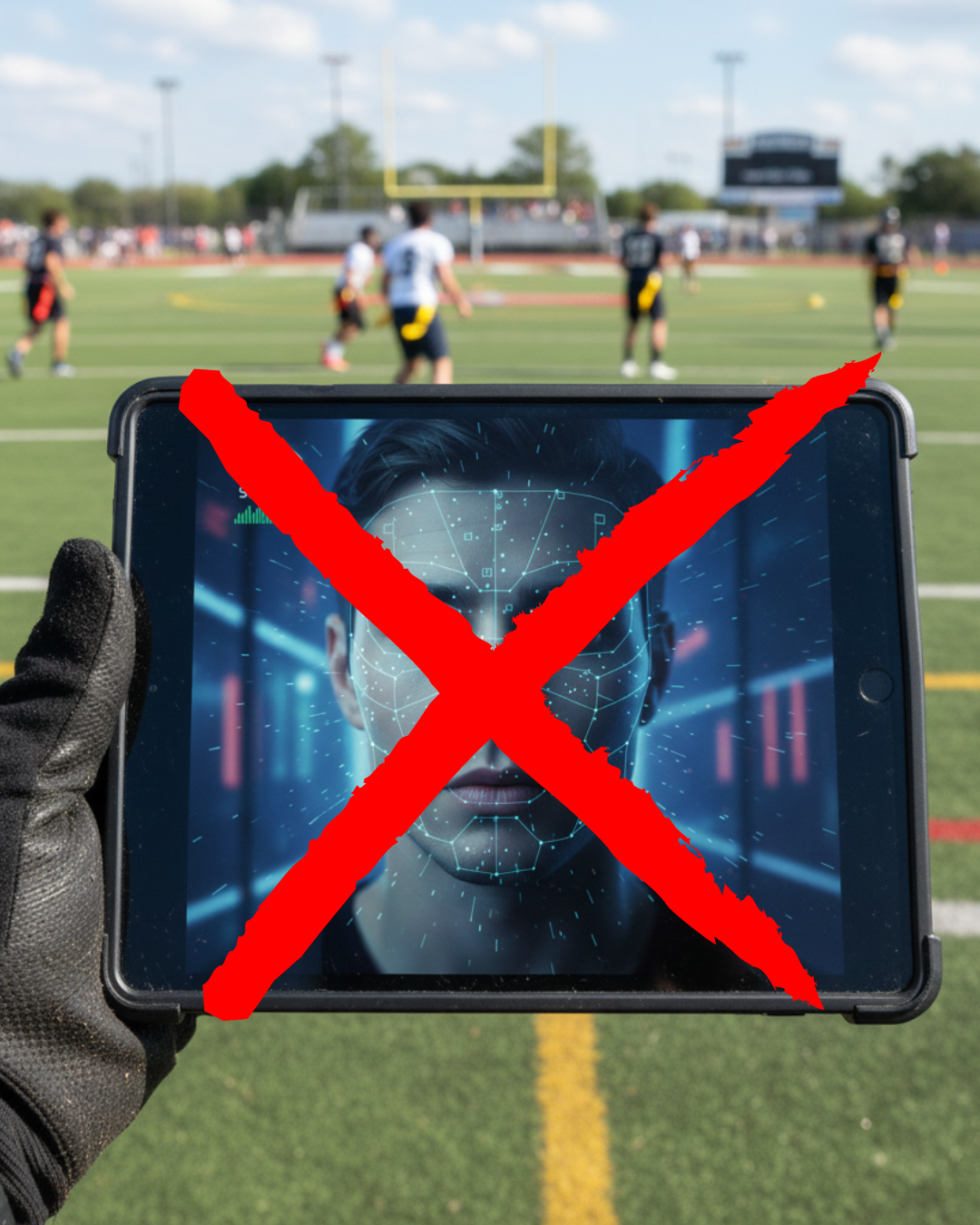
Companies are increasingly pitching facial recognition as a “next-gen” way to verify youth athletes at tournaments and events. But as regulators and courts evaluate biometric technology—especially where minors are involved—the legal and reputational risks are becoming harder to ignore.
Youth sports directors are under pressure to prevent roster fraud, reduce eligibility disputes, and speed up check-ins. That demand is driving vendors to promote biometric verification—especially facial recognition—as a fast, “paperless” solution.
The issue: facial recognition is not a simple convenience feature. It can involve the collection and processing of biometric identifiers, which come with heightened legal obligations, enforcement risk, and long-term privacy concerns—particularly for children.
What’s Happening: Vendors Are Pushing Biometrics for Youth Sports Verification
Youth sports has a real operational problem: check-in lines, paperwork overload, and eligibility conflict can derail a weekend. Vendors have responded by selling a promise—verify an athlete’s identity in seconds using a facial scan instead of manual document review.
For example, some youth sports platforms explicitly market “facial recognition” for age and identity verification and faster event check-ins. One such product page promotes “facial recognition” to verify athletes quickly and reduce paperwork.
When you zoom out, this isn’t just a youth sports trend. It’s part of a broader shift toward biometric identification across consumer settings. And regulators are increasingly signaling that biometrics require strict guardrails, transparency, and security—not “move fast” experimentation.
Why Facial Recognition Is Different: You Can’t Reset Biometrics
A password can be changed. A player card can be reissued. Biometric identifiers are different. Facial recognition systems typically rely on biometric data that functions as a persistent identifier. If biometric data is mishandled, exposed, or repurposed, the risk does not disappear with a reset.
That permanence is one reason biometric information is increasingly treated as high-risk data. In practice, it raises questions every youth organization must be able to answer clearly:
- Is parental consent explicit and meaningful?
- What data is stored (images, templates, “faceprints”), and for how long?
- Who has access, and what are the security controls?
- What happens when a family refuses biometric capture?
- What’s the breach plan if sensitive data is exposed?
Regulators Are Drawing Lines: New York State Banned Facial Recognition in K–12 Schools
In 2023, the New York State Education Department issued a formal determination that schools in New York State are prohibited from purchasing or using facial recognition technology. This decision followed a state-required process and review of biometric technology in school settings. (NYSED determination)
The determination matters because it shows how a major government authority evaluates facial recognition when minors are the subject. It also clarifies that schools must weigh privacy and civil rights impacts when considering other biometric technologies. You can read the official PDF order here: Biometric determination PDF
New York’s Office of Information Technology Services also published the underlying biometrics report that helped inform the decision. (NY ITS biometrics report)
Major news outlets also covered the decision and the report’s conclusion that risks to privacy and civil rights outweighed potential benefits. (Associated Press coverage)
Courts Are Holding Organizations Accountable: Biometric Lawsuits Can Be Costly
The strongest legal warning sign in the U.S. has come from Illinois, where the Biometric Information Privacy Act (BIPA) has become a major enforcement mechanism. In Rosenbach v. Six Flags, the Illinois Supreme Court addressed biometric collection involving a minor and reinforced that failing to meet biometric compliance requirements can create legal exposure—even without additional harm beyond the violation itself. (EPIC case page)
The point for youth sports is simple: if a platform or event operator collects biometric identifiers without clear, compliant consent and disclosures, it may create legal risk. And because youth sports often operates across state lines, the compliance burden becomes more complex—not less.
Biometric litigation has also emerged in education-related contexts. The Google Education BIPA settlement site highlights how biometric allegations can become a high-stakes, public dispute when minors and “school-like” environments are involved. (Google Education BIPA settlement site)
Federal Enforcement Pressure: The FTC Has Put Biometrics on Notice
The Federal Trade Commission has formally stated that it will scrutinize unfair or deceptive practices involving biometric information, including concerns around privacy, data security, and potential bias or discrimination. (FTC policy statement page)
For teams, leagues, and directors, that matters because “biometric privacy” isn’t theoretical. If a vendor markets a system as secure, deletes data “immediately,” or obtains “consent,” those claims must be true and provable. The FTC’s official PDF is available here: FTC biometric policy statement PDF
And broader legal commentary continues to document an ongoing “biometric backlash” as lawsuits and compliance demands increase. (JD Supra legal analysis)
So What Does This Mean for Youth Sports?
Youth sports is not a tech lab. It’s a trust-based environment involving children, parents, volunteers, and community programs. The moment facial recognition becomes part of “verification,” directors inherit new responsibilities:
- Consent expectations rise. Parents will demand clarity on what is collected, stored, and shared.
- Security expectations rise. A breach involving biometric data is fundamentally different than a leaked roster.
- Reputational risk rises. Families may view biometric capture as surveillance, not safety.
- Legal exposure rises. Biometric laws and enforcement are accelerating, and youth settings draw scrutiny.
The promise of a faster check-in does not offset the long-term liability if the system is challenged, misused, or compromised—especially when minors are involved.
Why NSID Does Not Use Facial Recognition or Biometric Data
At National Sports ID, we made a clear decision from the start: youth participation should never require biometric surveillance.
NSID does not use facial recognition or biometric identifiers to verify players. We take that position for three reasons:
1. Privacy is part of player safety
Protecting athletes is not only about on-field safety. It includes protecting the data attached to a child’s identity. When biometric identifiers are introduced, the privacy stakes become permanent—and families deserve better.
2. Clear compliance beats “cool tech”
Youth sports organizations operate across cities and states. Biometric rules and enforcement vary, and the legal landscape is evolving quickly. NSID’s approach is built around verification systems that support fairness and accountability without creating avoidable biometric exposure.
3. Better verification does not require biometric capture
The goal is simple: verified rosters, reduced eligibility disputes, and a smoother event experience. NSID helps organizations raise the standard without forcing families to hand over irreversible biometric identifiers.
If a vendor pitches facial recognition for your event, ask these questions:
- Is facial recognition required—or just easier for the vendor?
- What exactly is stored (images, templates, faceprints), and for how long?
- How is parental consent collected, recorded, and revocable?
- What happens if a family refuses biometric capture?
- Can you independently verify deletion and retention policies?
- What is the incident response plan if sensitive data is breached?
If the answers are unclear, that’s the point: unclear answers are how lawsuits start—and how trust is lost.
Raise the Standard Without Scanning Kids
NSID helps leagues, tournaments, and youth sports organizations verify athletes, lock rosters, and reduce eligibility disputes—without using facial recognition or biometrics. If you want a modern verification process that respects youth privacy, we’re ready to help.