
Tournament Eligibility Disputes: Why They Happen & How Organizations Prevent Them
Introduction
Tournament eligibility disputes have become one of the most common operational challenges in youth sports. As tournaments grow larger and competition becomes more intense, organizations increasingly face disagreements involving player eligibility, roster approvals, guest players, age requirements, grade restrictions, and participation rules.
Many disputes occur because eligibility verification is handled manually, inconsistently, or too late in the tournament process.
When organizations rely on paper rosters, screenshots, disconnected systems, or incomplete verification workflows, eligibility concerns may not surface until teams are already preparing to compete.
These situations can create tournament delays, operational confusion, protests between teams, scheduling disruptions, and increased administrative pressure on tournament directors and event staff.
This page explains why tournament eligibility disputes happen, the most common operational causes behind these conflicts, and how structured verification systems help organizations improve roster integrity and reduce disputes before competition begins.
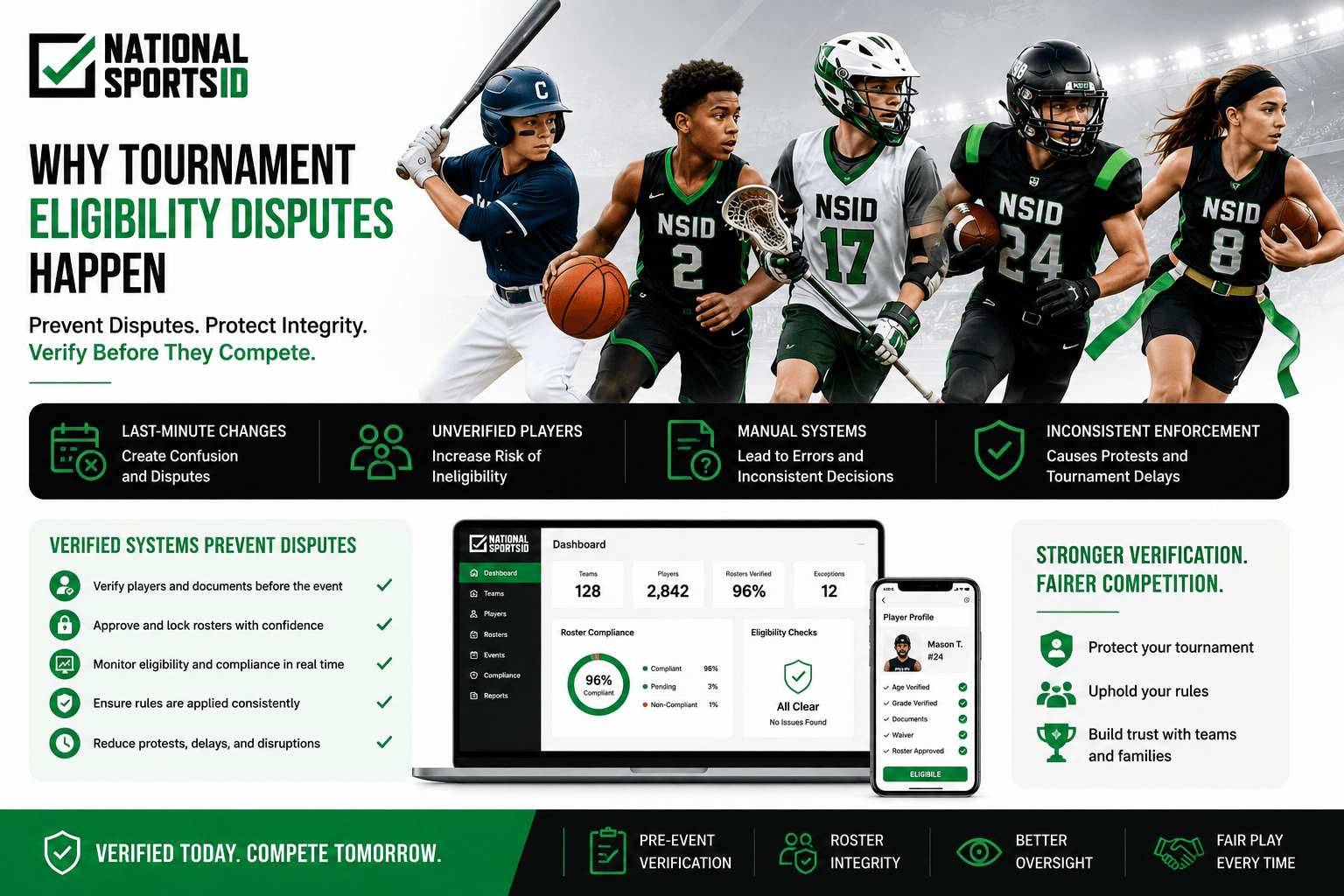
Tournament eligibility dispute problems including roster conflicts, player verification issues, guest player abuse, manual eligibility enforcement, and pre-event tournament verification workflows.
Request a Demo or Get Started → Book a Demo
Youth sports tournament eligibility platform showing verified roster workflows, compliance tracking systems, eligibility management dashboards, and centralized operational oversight tools.
Why Tournament Eligibility Disputes Have Increased
Modern youth sports tournaments now manage significantly more operational complexity than in previous years.
Organizations often oversee:
- Large multi-division events
- National travel teams
- Cross-organization participation
- Multi-team player involvement
- Guest player systems
- Overlapping tournament schedules
- Last-minute roster updates
- Multiple eligibility standards across divisions
As tournament operations become more complex, organizations relying on manual review systems often struggle to consistently enforce eligibility requirements across all teams and events.
This growing operational complexity increases the likelihood of disputes before and during competition.
Common Causes of Tournament Eligibility Disputes
Unverified Players
Players may participate before eligibility requirements are fully reviewed or approved.
Guest Player Issues
Temporary players may be added without full roster approval or eligibility verification.
Last-Minute Roster Changes
Teams may modify rosters too close to competition, creating confusion and inconsistent enforcement.
Manual Verification Problems
Paper documents, spreadsheets, screenshots, and disconnected workflows often create inconsistencies between teams and tournaments.
Age or Grade Eligibility Concerns
Disputes may arise when organizations cannot consistently confirm age or grade requirements before participation.
Inconsistent Operational Enforcement
Different tournament staff or organizations may apply rules differently when workflows are not centralized.
These operational issues frequently create conflict between teams, coaches, parents, and tournament administrators.
How Eligibility Disputes Impact Tournament Operations
Eligibility disputes affect more than just individual teams.
Organizations may also experience:
- Tournament delays
- Schedule disruptions
- Administrative bottlenecks
- Operational confusion during check-in
- Increased workload for event staff
- Sideline disputes between teams
- Reduce tournament-day operational disruption and delays
- Inconsistent competition environments
When eligibility issues are addressed during active competition, tournament operations often become more reactive and difficult to manage consistently.
Why Manual Eligibility Enforcement Often Fails
Many organizations still rely heavily on manual operational workflows such as:
- Paper roster sheets
- Email approvals
- Spreadsheet tracking
- Screenshots of player cards
- Manual document review
- Sideline eligibility checks
These workflows often make it difficult to:
- Confirm eligibility before competition
- Track roster approvals consistently
- Prevent unauthorized player participation
- Monitor compliance across divisions
- Maintain operational visibility in real time
- Resolve disputes efficiently
Manual systems frequently create operational blind spots during tournaments and league play.
Why Pre-Event Verification Matters
Many tournament eligibility disputes occur because verification happens too late.
When organizations attempt to resolve eligibility concerns during active tournaments, they may face:
- Long check-in delays
- Last-minute roster protests
- Inconsistent operational decisions
- Delayed game schedules
- Manual document review bottlenecks
- Increased conflict between teams and staff
Pre-event verification workflows help organizations complete eligibility review before competition begins.
This operational approach improves organization while reducing tournament-day friction and operational disruption.
How Verified Rosters Help Reduce Disputes
Verified roster systems help organizations improve roster integrity and eligibility enforcement before active competition begins.
These systems help organizations:
Lock Approved Rosters
Prevent unauthorized roster additions or substitutions after approval deadlines.
Centralize Eligibility Oversight
Allow directors to monitor roster approvals and compliance status across all divisions.
Improve Operational Consistency
Apply participation standards more consistently between teams and tournaments.
Reduce Tournament-Day Conflicts
Resolve eligibility concerns before teams arrive at events.
Improve Visibility Across Events
Track roster and compliance status in real time.
Verified roster workflows help organizations move from reactive dispute management toward more structured operational oversight.
Learn more about verified rostering software.
How Centralized Verification Systems Improve Tournament Management
Centralized systems help organizations streamline eligibility workflows while improving operational visibility.
These systems may support:
- Player age verification
- Grade eligibility review
- Digital waiver and document collection
- Pre-event roster approval workflows
- Compliance tracking systems
- Participation monitoring across teams
- Real-time eligibility visibility
This operational visibility helps organizations improve accountability while reducing administrative friction during tournaments.
How NSID Supports Tournament Eligibility Management
National Sports ID (NSID) provides centralized eligibility verification and roster management systems designed specifically for youth sports organizations.
These systems help organizations:
- Verify player age and grade requirements
- Approve and lock verified rosters
- Monitor eligibility and roster status
- Manage digital participation documents
- Improve operational oversight across tournaments
- Strengthen compliance management workflows
These workflows help organizations improve operational consistency while reducing tournament disputes and administrative inefficiencies.
Learn more about youth sports verification software.
Best Practices for Preventing Tournament Eligibility Disputes
Youth sports organizations can reduce eligibility conflicts by following several best practices:
- Define eligibility requirements before registration begins
- Verify players before participation starts
- Lock rosters before competition
- Use centralized verification systems
- Complete waiver and document collection digitally
- Monitor roster status in real time
- Resolve eligibility concerns before game day
- Reduce reliance on manual review workflows
These operational practices help organizations improve tournament management while supporting fair competition.
Without Structured Eligibility Systems vs. With Verified Systems
Without Structured Eligibility Systems
✅
With Verified Systems
Eligibility disputes during active tournaments
→
✅
Pre-event eligibility verification workflows
Manual roster and document review
→
✅
Centralized roster and compliance management
Operational confusion and inconsistent enforcement
→
✅
Structured eligibility oversight and visibility
Last-minute roster conflicts and protests
→
✅
Verified and locked roster systems
Administrative bottlenecks during tournaments
→
✅
Improved operational efficiency and oversight
Conclusion
Tournament eligibility disputes have become increasingly common as youth sports organizations manage larger events, more complex participation structures, and growing operational demands.
Manual verification workflows, disconnected systems, and inconsistent roster enforcement often create disputes, tournament delays, and administrative inefficiencies during competition.
Structured verification systems help organizations improve roster integrity, strengthen eligibility enforcement, reduce disputes, and streamline tournament operations through centralized operational oversight.
National Sports ID helps organizations manage eligibility verification, verified rosters, compliance tracking, and operational workflows through systems designed specifically for youth sports organizations.
How Verified Systems Improve Tournament Operations
Modern verification systems help organizations move from reactive dispute management toward proactive operational oversight.
These systems help leagues and tournaments:
- Finalize roster approvals before competition
- Improve operational consistency between events
- Reduce guest player and eligibility conflicts
- Improve visibility into compliance status
- Streamline tournament administration
- Reduce tournament-day operational disruption
By completing eligibility review before game day, organizations can improve tournament efficiency while creating more organized participation environments.
Explore NSID’s Verified Rostering Software
Tournament Eligibility Disputes FAQs
Why do tournament eligibility disputes happen?
Eligibility disputes often occur because organizations rely on manual workflows, disconnected systems, incomplete roster review, or inconsistent verification standards.
What causes roster disputes during tournaments?
Roster disputes may involve unverified players, guest player issues, last-minute roster changes, or incomplete eligibility review processes.
Why is pre-event verification important?
Pre-event verification helps organizations resolve eligibility concerns before competition begins instead of during active tournament play.
How do verified roster systems reduce disputes?
Verified roster systems help organizations approve and lock rosters before events, improving visibility and reducing operational conflicts.
What problems do manual eligibility systems create?
Manual systems often create operational bottlenecks, inconsistent enforcement, delayed check-ins, and limited visibility into compliance status.
Can directors monitor eligibility status in real time?
Yes. Centralized systems help organizations track roster approvals, compliance workflows, and eligibility status across tournaments and divisions.
How do centralized systems improve tournament operations?
Centralized systems help organizations improve operational consistency, streamline verification workflows, and reduce tournament-day disputes.
What is a verified roster?
A verified roster is a locked roster containing only approved and eligible participants before competition begins.