
Player Verification Guide for Youth Sports
Introduction
Player verification is one of the most important parts of running a fair and organized youth sports league or tournament. Before athletes participate, organizers must confirm that players meet the age or grade requirements established by the league, tournament, or governing body.
Youth sports player verification helps prevent eligibility disputes, reduce fraud, and ensure that athletes are competing in the correct division. For tournament directors and league administrators, a clear player verification process is essential to maintaining fairness and protecting the integrity of competition.
This guide explains how youth sports player verification works, what documents are commonly required, and how leagues and tournaments can simplify the process using digital verification tools.
Request a Demo or Get Started with NSID → Book a Demo
What Is Player Verification in Youth Sports?
Player verification in youth sports is the process of confirming that an athlete is eligible to participate in a specific division, team, league, or tournament.
Verification usually includes reviewing documents that confirm a player’s age or grade and ensuring that the athlete meets any other eligibility rules established by the organization.
A strong verification process helps leagues and tournaments:
• Confirm that players are competing in the correct age or grade division
• Prevent altered or inaccurate documents from being used
• Reduce disputes during event check-in
• Create a more consistent and fair experience for all participants
Why Player Verification Matters
Without a clear player verification process, leagues and tournaments may face avoidable problems that affect fairness and event operations.
These challenges can include:
• Players competing in the wrong age division
• Teams submitting incomplete or inaccurate records
• Long check-in lines caused by manual document review
• Eligibility disputes between teams or organizations
• Reduced trust in the event or league
Player verification helps directors and organizers confirm that athletes meet participation requirements before games begin.
How Youth Sports Player Verification Works
Traditionally, teams brought physical documents such as birth certificates, passports, or report cards to check-in. Tournament staff would manually review those documents before approving athletes to participate.
Many leagues and tournaments now use digital player verification systems that allow documents to be submitted and reviewed before an event begins.
A typical verification process may include:
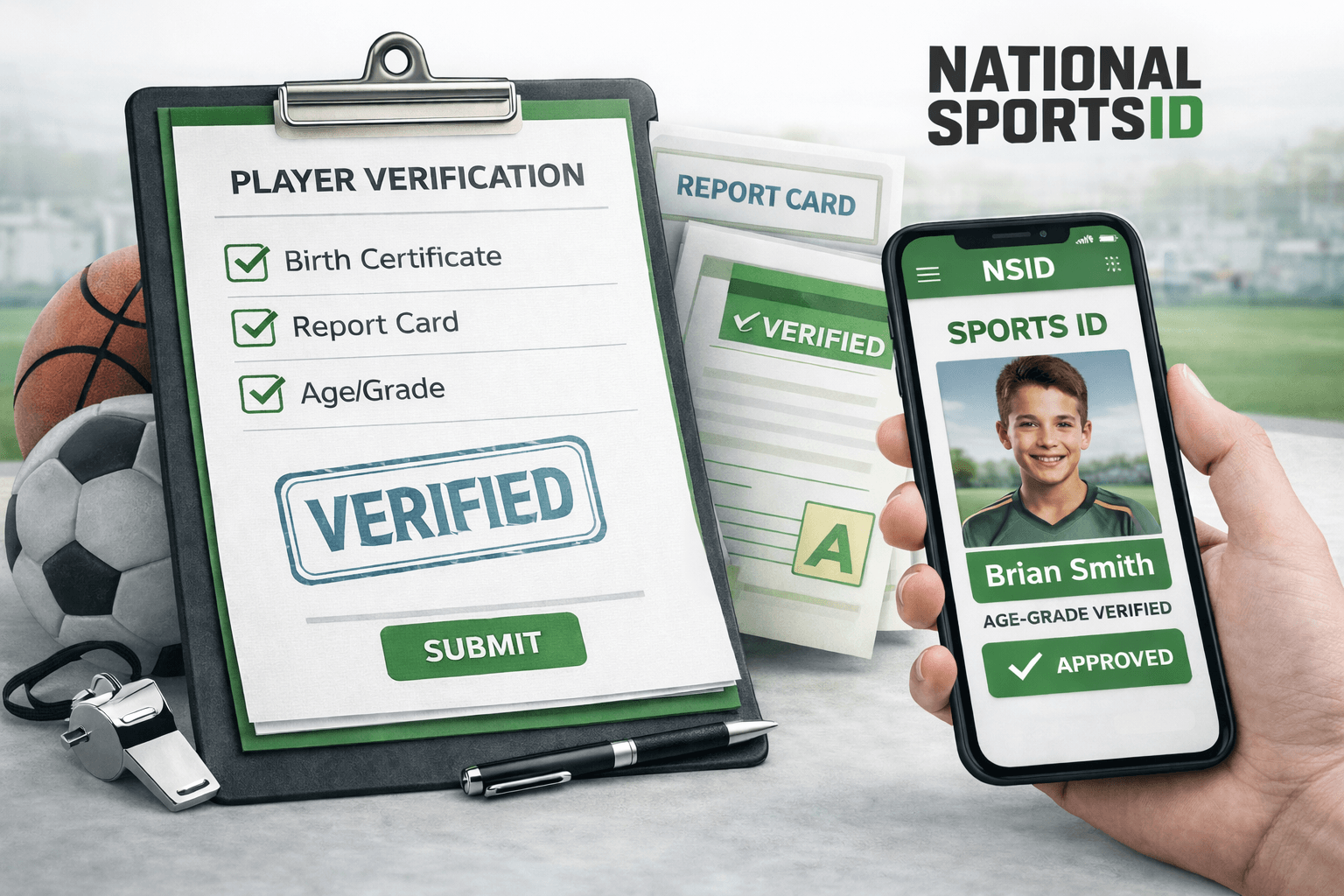
• Submitting a player’s required eligibility documents
• Reviewing the documents to confirm age or grade requirements
• Approving the athlete once eligibility is confirmed
• Issuing a verified record or Sports ID that can be used across participating events
This process helps reduce administrative work while making player verification faster and more consistent.
Learn more about Player Age Verification for Youth Sports
Documents Commonly Used for Player Verification
Youth sports leagues and tournaments may require one or more official documents to verify a player’s eligibility.
Common documents include:
• Birth certificates
• Passports
• State identification cards
• School report cards
• School enrollment records
• Proof of residency when required by the organization
The exact documents required depend on the rules of the league, tournament, or governing body.
By collecting these documents in advance, organizers can review eligibility before players arrive at the event.
Age Verification vs Grade Verification
Some youth sports organizations divide athletes by age, while others divide them by grade level. Because of this, player verification may involve confirming one or both eligibility standards.
Age verification confirms that an athlete meets the age requirement for the division.
Grade verification confirms that the athlete is enrolled in the appropriate school grade when a league or tournament uses grade-based participation rules.
Some events require both age and grade to be verified in order to approve participation.
Challenges With Manual Player Verification
Manual player verification can be difficult for both families and organizers.
Common challenges include:
• Lost or forgotten documents at check-in
• Inconsistent review standards between staff members
• Long wait times before games begin
• Difficulty storing and organizing paper documents
• Increased risk of eligibility disputes during an event
Digital verification systems help solve many of these problems by allowing player documents to be submitted, reviewed, and approved before the event begins.
How Digital Verification Helps Leagues and Tournaments
Digital player verification allows organizations to streamline the process while maintaining strong compliance standards.
Benefits of digital verification include:
• Reviewing documents before the event begins
• Reducing long check-in lines
• Creating a consistent verification process
• Making records easier to organize and access
• Improving communication with parents, coaches, and directors
• Helping tournaments confirm eligible rosters before game day
Platforms such as National Sports ID help leagues and tournaments simplify player verification by providing a centralized system for document collection, review, and approval.
Best Practices for Player Verification
Leagues and tournament directors can strengthen their verification process by following several best practices:
• Clearly communicate which documents are required
• Collect documents before the season or tournament begins
• Use a consistent review process for all players
• Verify age or grade before roster approval
• Avoid relying solely on event-day manual document checks
• Keep records organized and secure
• Require updated documents only when additional information is needed
These steps help create a fair and efficient player verification system for all participants.
Player Verification and Tournament Compliance
Player verification is a key part of broader youth sports compliance.
When directors verify players properly, they also support:
• Fair competition
• Accurate team rosters
• Smoother tournament operations
• Better document management
• Reduced disputes at check-in
For many organizations, player verification is the first step in a larger compliance process that also includes waiver collection, coach verification, and roster validation.
Without Player Verification vs. With Verified Systems
Without Player Verification
✅
With Verified Systems
Teams bring paper documents to tournaments
→
✅
Player documents submitted and reviewed before events
Manual document checks at check-in
→
✅
Digital verification completed in advance
Long lines and delays before games begin
→
✅
Faster check-in with pre-verified players
Inconsistent verification standards across teams
→
✅
Standardized verification process for all players
Higher risk of eligibility disputes
→
✅
Verified records reduce disputes and confusion
Difficult to store and manage player documents
→
✅
Organized digital records accessible anytime
Conclusion
Youth sports player verification helps leagues and tournaments maintain fairness, confirm eligibility, and reduce administrative issues before athletes take the field or court.
By using a structured process to review age and grade documents, organizations can reduce disputes, improve check-in efficiency, and ensure that athletes participate in the correct division.
National Sports ID helps leagues and tournaments simplify player verification by providing digital tools for eligibility review, document collection, and verification management.
Learn more about National Sports ID Player Verification for Tournaments and Leagues
If you’re looking to simplify player verification and eliminate manual check-in issues, National Sports ID provides a complete solution for leagues and tournaments.
Get started with National Sports ID today.
• Player age and grade verification
• Document collection and tracking
• Electronic waiver management
• Coach verification and background checks
• Team roster validation
• Tournament scheduling tools
Learn more about NSID’s Event Management Tools
Youth Sports Director FAQs
What is player verification in youth sports?
Player verification is the process of reviewing documents and confirming that an athlete meets the age or grade requirements for a league or tournament.
Why do youth sports tournaments verify player age?
Tournaments verify player age to ensure athletes compete in the correct division and to protect the fairness of youth sports competition.
What documents are used to verify youth sports players?
Common documents include birth certificates, passports, state identification cards, report cards, and school records, depending on the requirements of the organization.
Do players need to be verified for every tournament?
In many cases, once a player has been verified, the verified record can be used across multiple participating leagues and tournaments unless an updated document is specifically required.
What is the difference between age verification and grade verification?
Age verification confirms an athlete’s birth date, while grade verification confirms the athlete’s current school grade when grade-based eligibility rules apply.
How can leagues verify players before tournament day?
Leagues and tournaments can collect and review documents digitally before the event begins so that player eligibility is confirmed in advance.
Why is manual player verification difficult?
Manual verification can cause long lines, inconsistent document review, lost paperwork, and eligibility disputes during check-in.
How does digital player verification help tournament directors?
Digital verification helps directors review documents early, organize records, reduce check-in delays, and confirm team eligibility before games begin.
Can player verification help prevent age fraud?
Yes. A structured verification process helps reduce age and eligibility fraud by requiring official documents to be reviewed before participation is approved.
How does National Sports ID help with player verification?
National Sports ID helps leagues and tournaments manage player age and grade verification through digital document collection, review, and eligibility management tools.