
Facial Recognition in Youth Sports: What Parents and League Directors Need to Know
Introduction
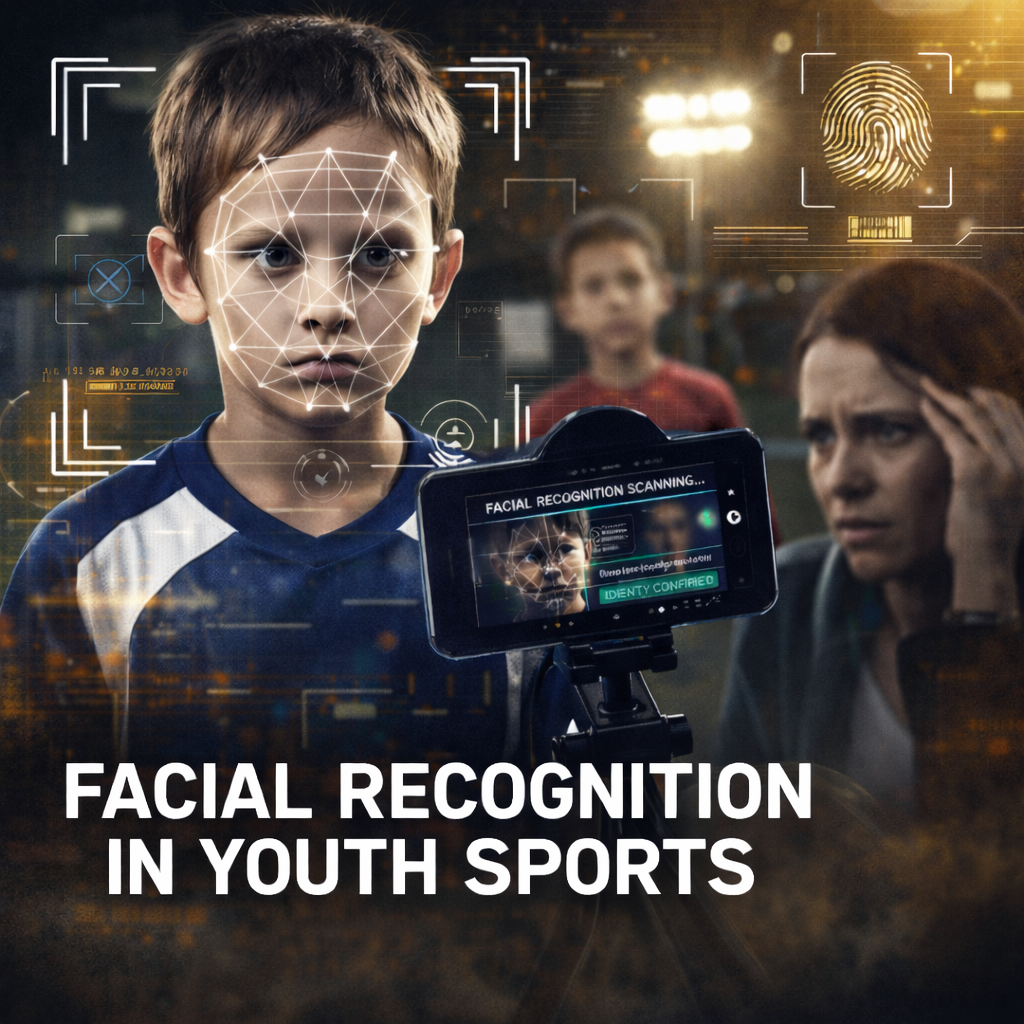
Facial recognition technology is starting to appear in youth sports—from event check-in systems to digital player identification. While it promises speed and convenience, many parents and league operators don’t fully understand what’s happening behind the scenes when a child’s face is scanned.
This guide breaks down what facial recognition means in youth sports, why it’s being used, and what you should consider before participating in any system that uses it.
Request a Demo or Get Started with NSID → Book a Demo
What Is Facial Recognition?
Facial recognition is a type of biometric technology that scans a person’s face and converts it into a unique digital identifier.
In youth sports, this can be used to:
- Identify players at check-in
- Match athletes to previously created profiles
- Verify eligibility or roster placement
Unlike a password or ID card, facial recognition is tied directly to a child’s physical identity.
⚠️ What Parents Should Understand Before Using Facial Recognition
Facial recognition is fundamentally different from other types of data collection.
When a child’s face is scanned, questions naturally arise:
- Where is that data stored?
- How long is it kept?
- Is it used again at future events?
- Who has access to it?
Because facial data is permanent and unique, it cannot be changed like a password if something goes wrong.
For many families, this raises concerns about long-term privacy and control.
Facial Recognition and Youth Data Privacy
Traditionally, teams brought physical documents such as birth certificates, passports, or report cards to check-in, where tournament staff manually reviewed them before approving athletes to participate. Today, this process has been streamlined through digital verification systems. National Sports ID has been providing this solution for over 10 years—learn more in our Guide to Youth Sports Age Verification.
Across the United States, privacy laws related to biometric data are evolving.
Some states have implemented stricter rules around:
- The collection of biometric identifiers
- How consent is obtained
- How long data can be retained
At the same time, expectations from parents are changing.
Families increasingly want to understand:
- What information is being collected
- Why it’s being collected
- How it is being used over time
Transparency and trust are becoming just as important as convenience.
Learn more about the NSID Privacy Policy.
Questions Every Parent and League Should Be Asking
If facial recognition is part of a youth sports experience, it’s reasonable to pause and ask:
- What exactly is being collected when a face is scanned?
- Is the data reused beyond a single event?
- Can it be removed if a parent changes their mind?
- Is participation required, or optional?
These are not technical questions—they are basic expectations around a child’s personal data.
The Right Approach to Player Verification
At National Sports ID, we believe that protecting young athletes should always come first.
That’s why our approach focuses on:
- Verified identity through secure documentation
- Clear, transparent processes for families
- Systems designed with privacy and control in mind
We’ve made a deliberate decision to avoid practices that may create uncertainty around how a child’s data is used or stored.
What This Means for Parents
When it comes to your child, it’s natural to want both safety and simplicity. But it’s also important to understand what you are agreeing to when facial recognition is used.
Many parents don’t realize that facial recognition may involve:
- Storing a digital representation of their child’s face
- Reusing that data across multiple events or organizations
- Keeping that data for an unknown period of time
Unlike a password or account login, biometric data is permanent. It cannot be changed if it is ever misused or exposed.
Before participating in any system that uses facial recognition, parents should feel confident that they fully understand:
- What is being collected
- Why it is being used
- How long it is being kept
Your child’s identity is one of the most sensitive forms of personal data—and it deserves careful consideration.
What This Means for League and Tournament Directors
For directors and event operators, new technology can offer efficiency—but it also introduces new responsibilities.
When facial recognition is part of your check-in or verification process, your organization may be taking on additional considerations related to:
- Data handling and storage
- Parent communication and expectations
- Evolving privacy standards across different states
Even if a third-party vendor is providing the technology, the responsibility for how it is used at your event may still reflect on your organization.
As a result, many directors are taking a closer look at how player verification is handled and whether it aligns with their organization’s commitment to safety, transparency, and trust.
Choosing the right approach is not just about speed—it’s about protecting your players, your families, and your reputation.
Facial Recognition vs. NSID Verified Systems
Facial Recognition Systems
✅
NSID Verified Systems (No Biometrics)
Biometric data (face scans) collected from minors
→
✅
No biometric data collected or stored
Legal and compliance risks due to biometric laws
→
✅
Compliant verification using standard documentation
Uncertainty around data storage, retention, and access
→
✅
Clear, transparent handling of player information
Biometric data cannot be changed if compromised
→
✅
Documents and accounts can be updated or replaced
Requires parental consent and ongoing legal oversight
→
✅
Simple, transparent verification process for families
Potential liability if data is misused or breached
→
✅
Lower risk approach focused on safety and compliance
Final Thoughts
Technology will continue to shape youth sports—but not all solutions carry the same level of responsibility. Facial recognition may offer speed, but families and organizations should carefully consider the broader implications.
When it comes to young athletes, trust, transparency, and long-term safety should always come before convenience.
Learn more about National Sports ID Player Verification for Tournaments and Leagues
National Sports ID provides tools that help leagues and tournaments simplify compliance while prioritizing safety and transparency:
- Player age and grade verification
- Secure document collection and tracking
- Electronic waiver management
- Coach verification and background checks
- Team roster validation
- Tournament scheduling tools
Our approach is designed to give organizations a reliable way to verify players without relying on biometric data or facial recognition tracking.
Learn more about National Sports ID Verification Tools.
Facial Recognition in Youth Sports: Frequently Asked Questions
Is facial recognition required for youth sports participation? No. Many organizations offer alternative verification methods. Parents should always understand whether participation is optional and what choices are available.
Is my child’s facial data stored after an event? This depends on the system being used. In some cases, data may be retained beyond a single event, which is why it’s important for parents to understand how information is handled.
Can facial recognition data be deleted? Policies vary by provider. Parents should feel comfortable asking whether data can be removed and what the process looks like.
Is facial recognition safe for children? Facial recognition can be used responsibly, but it involves sensitive personal data. Parents should be aware of how that data is collected, stored, and used over time.
Are there alternatives to facial recognition for player verification? Yes. Many organizations use document-based verification, roster validation, and secure ID systems that do not rely on biometric data.