
Youth Sports Data Privacy & Security Standards
Introduction
Youth sports organizations manage large amounts of sensitive information throughout league and tournament operations. Player records, eligibility documents, waivers, coach certifications, roster data, and participation information all require secure handling and structured operational processes.
As youth sports programs increasingly rely on digital systems, organizations must ensure participant information is managed securely and handled responsibly across leagues, tournaments, and club programs.
Without structured privacy and security standards, organizations may face inconsistent operational workflows, document management issues, administrative errors, and increased operational risk.
This page explains the importance of youth sports data privacy and security standards, how structured systems help organizations manage sensitive information more effectively, and the operational approaches used to support safer and more organized participation environments.
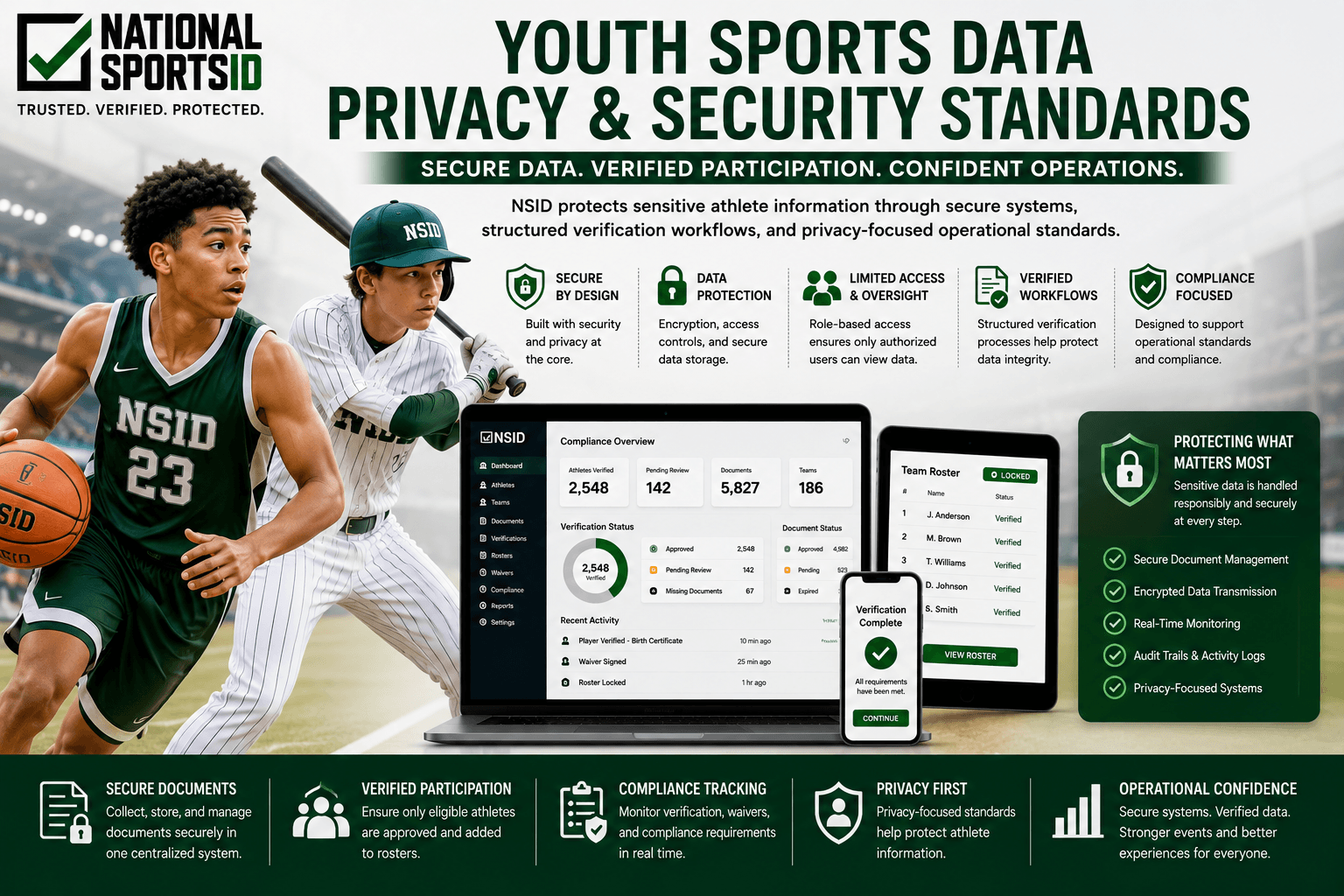
Youth sports data privacy and security standards for leagues and tournaments covering secure verification workflows, digital document management, roster integrity, and compliance systems.
Request a Demo or Get Started → Book a Demo
What Are Youth Sports Data Privacy & Security Standards?
Youth sports data privacy and security standards refer to the operational systems, workflows, and safeguards organizations use to manage sensitive participant information responsibly.
These standards may involve:
- Secure document collection
- Controlled administrative access
- Digital waiver and form management
- Verification workflow oversight
- Centralized roster management
- Compliance tracking systems
- Operational visibility and monitoring
Structured standards help organizations improve operational consistency while reducing risks associated with manual or disconnected systems.
Why Privacy & Security Matter in Youth Sports
Youth sports organizations often manage information related to:
- Player eligibility and verification
- Birth certificates and school documents
- Waivers and participation forms
- Coach certifications and approvals
- Team and roster information
- Tournament and league compliance records
Without structured operational systems, organizations may experience:
- Lost or incomplete records
- Manual administrative errors
- Delays caused by missing documents
- Inconsistent operational processes
- Limited visibility into compliance status
- Increased administrative workload
Centralized systems help organizations improve organization while securely managing operational workflows.
Key Components of Youth Sports Privacy & Security Standards
Secure Document Management
Digital systems help organizations securely collect, organize, and track required documents and waivers.
Controlled Access & Operational Oversight
Administrative access is limited to authorized users and operational roles.
Centralized Verification Systems
Verification workflows are managed through centralized operational systems instead of disconnected manual processes.
Real-Time Compliance Visibility
Organizations can monitor verification, roster approvals, and compliance requirements in real time.
Reduced Reliance on Paper Workflows
Digital systems help reduce operational risks associated with paper-based document handling and manual tracking.
Together, these systems help organizations improve operational consistency and streamline participation management.
Learn more about youth sports waiver and document management software.
How NSID Supports Youth Sports Privacy & Security
National Sports ID (NSID) provides centralized operational systems designed specifically for youth sports organizations.
These systems help organizations manage:
- Player age and grade verification
- Verified roster management
- Digital waiver and document collection
- Coach approvals and certifications
- Compliance tracking workflows
- Pre-event verification systems
These workflows help leagues and tournaments improve organization while maintaining structured operational oversight.
Learn more about youth sports verification software.
AI-Assisted Verification & Operational Support
NSID uses AI-assisted systems to help support verification workflows, document organization, operational monitoring, and large-scale participation management across leagues and tournaments.
These systems help organizations:
- Improve verification workflow efficiency
- Organize operational and compliance processes
- Reduce repetitive administrative tasks
- Support high-volume tournament and league operations
- Maintain structured verification oversight through human review
NSID combines technology-assisted workflows with human operational oversight to help maintain verification consistency and organized compliance management.
Learn more about AI-assisted verification with human review.
Why NSID Does Not Use Facial Recognition
NSID does not rely on facial recognition or biometric scanning systems for youth sports verification workflows.
Instead, NSID focuses on:
- Document-based verification systems
- Verified roster approvals
- Human-reviewed operational workflows
- Structured compliance management
- Centralized operational controls
This approach helps organizations maintain operational consistency while avoiding reliance on biometric technologies.
Learn more about why NSID does not use facial recognition.
Best Practices for Youth Sports Privacy & Security
Youth sports organizations can improve operational security and consistency by following several best practices:
* Use centralized digital verification systems
* Reduce reliance on paper-based workflows
* Limit administrative access to authorized users
* Track roster and compliance status in real time
* Complete verification before events begin
* Use verified roster systems to improve eligibility enforcement
* Maintain structured operational review workflows
These practices help organizations streamline operations while improving oversight and participation management.
Without Structured Privacy & Security Standards vs. With Verified Systems
Without Structured Privacy & Security Standards
✅
With Verified Systems
Paper-based document collection and tracking
→
✅
Secure digital document workflows
Manual verification and operational inconsistencies
→
✅
Centralized verification and compliance systems
Limited visibility into roster and compliance status
→
✅
Real-time operational and compliance tracking
Higher administrative workload and follow-up
→
✅
Streamlined workflows with centralized visibility
Disconnected operational and compliance systems
→
✅
Integrated operational oversight and management
Conclusion
Youth sports organizations require structured operational systems that support secure document handling, verification consistency, roster integrity, and centralized compliance management.
By using digital verification systems, secure operational workflows, and structured oversight processes, leagues and tournaments can improve organization, reduce operational inefficiencies, and create more reliable participation environments.
National Sports ID helps organizations manage verification, rosters, waivers, compliance tracking, and operational workflows through systems designed specifically for youth sports organizations.
Learn More About NSID Verification & Compliance Systems
National Sports ID provides systems that help organizations manage:
- Player age and grade verification
- Verified roster management
- Coach approvals and certifications
- Digital waiver and document collection
- Tournament and league compliance workflows
- Pre-event verification systems
Youth Sports Data Privacy & Security Standards FAQs
What are youth sports data privacy and security standards?
These standards help organizations securely manage verification, waivers, rosters, compliance workflows, and participant information.
Why are privacy and security important in youth sports?
Youth sports organizations manage sensitive participant information that requires structured operational systems and secure workflows.
How do digital systems improve operational security?
Digital systems help organizations centralize workflows, improve oversight, reduce manual processes, and securely manage required documents.
Does NSID use facial recognition technology?
No. NSID does not rely on facial recognition or biometric scanning systems for youth sports verification workflows.
What is AI-assisted verification with human review?
AI-assisted verification uses technology alongside human operational review workflows to improve efficiency and verification consistency.
How do verified roster systems improve operations?
Verified roster systems help ensure only approved and eligible participants are allowed to compete.
Can directors track compliance and roster status in real time?
Yes. Centralized systems allow directors to monitor roster approvals, verification status, and compliance requirements in real time.
Why are centralized operational systems important?
Centralized systems help organizations improve visibility, reduce operational inefficiencies, and streamline compliance management.