
Understanding Verified Player Eligibility
Introduction
Player eligibility is one of the most important components of youth sports operations. Leagues, tournaments, and governing organizations must ensure that athletes meet participation requirements before competing.
Eligibility standards may include age requirements, grade requirements, roster approval rules, waivers, residency requirements, school attendance validation, or organization-specific participation guidelines.
Without structured eligibility systems, organizations may experience disputes, roster inconsistencies, unauthorized player participation, and operational challenges before or during competition.
Verified player eligibility systems help organizations confirm participation requirements before games begin through structured verification workflows, roster management, and compliance tracking.
This page explains how verified player eligibility works, why it matters in youth sports, and how organizations use verification systems to improve operational consistency and fair competition.
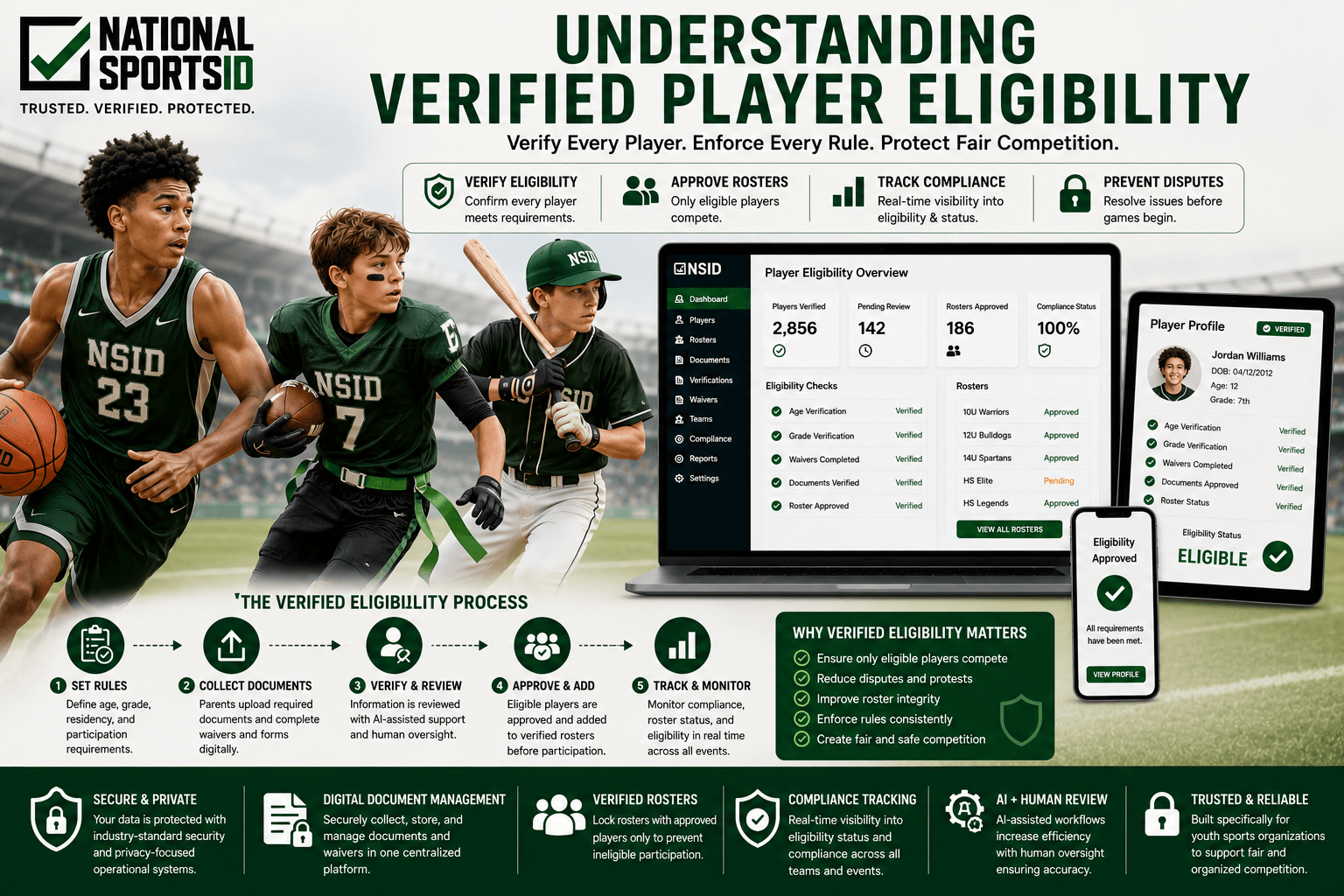
Understanding verified player eligibility for youth sports organizations including age verification, grade validation, roster approvals, compliance tracking, and operational verification workflows.
Request a Demo or Get Started with NSID → Book a Demo
Youth sports verified player eligibility platform showing age and grade verification workflows, verified roster approvals, compliance tracking systems, and operational eligibility management tools.
What is Verified Player Eligibility?
Verified player eligibility refers to the process of confirming that athletes meet all participation requirements before being approved for competition.
Eligibility verification may include:
- Player age verification
- Grade validation
- Roster approval workflows
- Waiver and document completion
- Residency or school verification
- League or tournament participation requirements
- Coach and team approval workflows
Verified eligibility systems help organizations ensure that only approved participants are allowed to compete.
Why Player Eligibility Matters in Youth Sports
Youth sports organizations rely on eligibility standards to support fair competition, operational consistency, and organized event management.
Without structured eligibility workflows, organizations may experience:
- Ineligible players participating
- Last-minute roster disputes
- Manual eligibility reviews before games
- Inconsistent rule enforcement
- Missing documentation or waivers
- Administrative inefficiencies during tournaments
Verification systems help organizations resolve eligibility concerns before participation begins.
Common Eligibility Requirements in Youth Sports
Different leagues, tournaments, and governing organizations may use different eligibility standards depending on the sport or competition level.
Common requirements may include:
Age-Based Eligibility
Athletes compete based on birth year or age cutoff dates.
Grade-Based Eligibility
Participation is determined by school grade level requirements.
School or Residency Verification
Organizations may require proof of residency or school enrollment.
Waiver & Document Completion
Players must complete required waivers and participation documents before approval.
Verified Rosters
Only approved and eligible players are added to verified team rosters.
These workflows help organizations improve roster integrity and operational consistency.
Learn more about how verified rosters prevent cheating in youth sports.
How Verified Player Eligibility Works
Most verified eligibility systems follow a structured operational process.
1. Establish Eligibility Rules
Organizations define age, grade, roster, and participation requirements before registration begins.
2. Collect Required Documents
Parents or guardians upload required documents and complete participation forms.
3. Verification Review
Eligibility information is reviewed through operational workflows and verification systems.
4. Approve Eligible Participants
Approved players are added to verified rosters and compliance systems before participation.
5. Track Eligibility & Compliance
Organizations monitor roster approvals, compliance status, and participation requirements in real time.
These workflows help reduce disputes and improve organization before competition begins.
How NSID Supports Verified Player Eligibility
National Sports ID (NSID) provides centralized verification systems designed specifically for youth sports organizations.
These systems help organizations manage:
- Player age and grade verification
- Verified roster approvals
- Digital waiver and document collection
- Tournament and league compliance tracking
- Pre-event verification workflows
- Centralized operational oversight
These workflows help leagues and tournaments improve operational consistency while supporting structured eligibility management.
Learn more about youth sports verification software.
AI-Assisted Verification With Human Review
NSID uses AI-assisted systems alongside human operational review workflows to help support eligibility verification and operational consistency.
This approach helps organizations:
- Improve verification workflow efficiency
- Support large-scale tournament operations
- Streamline document review processes
- Reduce repetitive administrative work
- Maintain structured eligibility oversight through human review
Human operational oversight remains an important part of verification and eligibility workflows.
Learn more about AI-assisted verification with human review.
Why Verified Rosters Matter for Eligibility Enforcement
Verified rosters help organizations enforce player eligibility before competition begins.
Verified roster systems help:
- Prevent unauthorized roster changes
- Ensure only approved players participate
- Improve operational consistency
- Reduce disputes between teams
- Track roster approvals in real time
Pre-event verification and roster management workflows help organizations address eligibility concerns before game day instead of during competition.
Best Practices for Managing Player Eligibility
Youth sports organizations can improve eligibility management by following several best practices:
- Define eligibility rules before registration opens
- Verify age and grade requirements before participation
- Use centralized verification systems
- Complete waiver and document collection before events begin
- Lock verified rosters before competition
- Track compliance status in real time
- Resolve eligibility concerns before game day
These workflows help organizations improve organization, reduce disputes, and support fair competition.
Without Verified Eligibility Systems vs. With Verified Systems
Without Verified Eligibility Systems
✅
With Verified Systems
Manual eligibility reviews before games
→
✅
Eligibility verified before participation
Unverified roster changes and player additions
→
✅
Verified and locked roster workflows
Limited visibility into eligibility status
→
✅
Real-time compliance and roster tracking
Eligibility disputes during tournaments
→
✅
Pre-event eligibility enforcement workflows
High administrative workload and manual tracking
→
✅
Centralized verification and operational oversight
Conclusion
Verified player eligibility systems help youth sports organizations improve operational consistency, reduce disputes, and support fair competition across leagues and tournaments.
By verifying eligibility requirements before participation begins, organizations can streamline operations, improve roster integrity, and reduce administrative challenges during events.
National Sports ID helps organizations manage player eligibility, verified rosters, compliance workflows, and operational oversight through systems designed specifically for youth sports organizations.
Learn More About NSID Verification Systems
National Sports ID provides systems that help organizations manage:
- Player age and grade verification
- Verified roster management
- Digital waiver and document collection
- Tournament and league compliance workflows
- Pre-event verification systems
- Centralized operational visibility and tracking
Understanding Verified Player Eligibility FAQs
What is verified player eligibility?
Verified player eligibility is the process of confirming that athletes meet participation requirements before being approved for competition.
Why is player eligibility important in youth sports?
Eligibility standards help organizations support fair competition, reduce disputes, and maintain operational consistency.
What documents are commonly used for eligibility verification?
Organizations may use birth certificates, school documents, waivers, residency records, or other participation documents.
What is a verified roster?
A verified roster is a locked roster containing only approved and eligible participants.
How do centralized systems improve eligibility management?
Centralized systems help organizations streamline workflows, improve visibility, and track compliance in real time.
Does NSID use AI-assisted verification?
Yes. NSID uses AI-assisted systems alongside human operational review workflows.
Can directors track eligibility and roster approvals in real time?
Yes. Centralized systems allow directors to monitor eligibility, compliance status, and roster approvals in real time.
Why do organizations verify players before events begin?
Pre-event verification helps reduce disputes, improve organization, and prevent eligibility issues during competition.