
NSID Trust, Privacy & Compliance Standards
Introduction
Trust, privacy, and compliance are essential components of modern youth sports operations. Organizations today manage sensitive player information, eligibility records, waivers, coach certifications, and participation data across leagues, tournaments, and club programs.
Without structured standards and secure systems, organizations may face inconsistent verification processes, administrative errors, data handling concerns, and operational risk.
National Sports ID (NSID) provides verification and compliance systems designed to help youth sports organizations manage eligibility, documentation, and operational workflows through centralized and structured processes.
This page outlines the standards, operational principles, and privacy-focused approach NSID uses to support leagues, tournaments, and youth sports organizations across the country.
Request a Demo or Get Started → Book a Demo
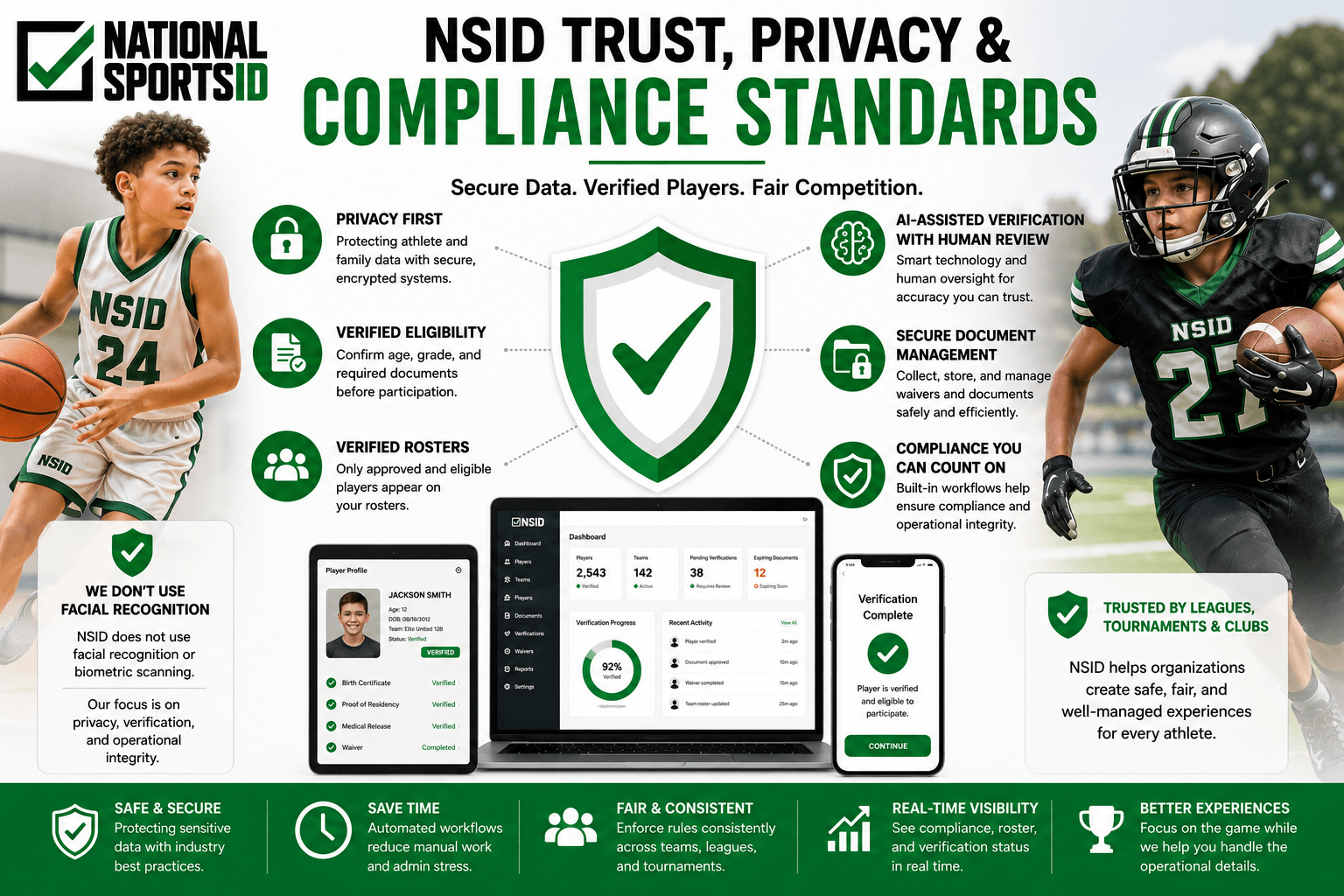
NSID trust, privacy, and compliance standards infographic showing secure player verification, waiver management, verified rosters, and compliance tracking for youth sports organizations.
Why Trust & Compliance Matter in Youth Sports
Youth sports organizations manage large amounts of sensitive information and operational data throughout the season.
This may include:
- Player eligibility records
- Age and grade verification documents
- Waivers and participation forms
- Coach certifications and approvals
- Team and roster data
- Tournament and league compliance records
Without structured compliance systems, organizations may experience:
- Inconsistent rule enforcement
- Missing documentation
- Eligibility disputes
- Manual operational errors
- Limited visibility into compliance status
- Increased administrative workload
Structured systems help organizations improve operational consistency while protecting sensitive information.
NSID Verification & Compliance Standards
NSID uses centralized verification and compliance workflows designed specifically for youth sports organizations.
These standards focus on:
Verified Eligibility
Players complete eligibility verification before participation.
Structured Compliance Workflows
Organizations track requirements and approvals through centralized systems.
Verified Rosters
Only approved participants are added to verified team rosters.
Pre-Event Readiness
Verification and compliance requirements are completed before events begin.
Real-Time Visibility
Directors and administrators can monitor roster and compliance status in real time.
These workflows help reduce disputes, improve organization, and support fair competition.
Learn more about youth sports verification software.
Data Privacy & Security Principles
Protecting participant information is an important part of youth sports operations.
NSID’s operational approach includes:
- Secure systems and controlled access
- Encrypted data handling practices
- Centralized document management
- Reduced reliance on manual paper records
- Structured compliance tracking
- Limited access to sensitive information
Digital systems help organizations securely manage compliance workflows while improving operational efficiency.
Learn more about youth sports waiver and document management software.
AI-Assisted Verification With Human Review
NSID uses AI-assisted technology alongside human review processes to help improve verification efficiency and operational consistency.
This approach helps organizations:
- Streamline document review workflows
- Improve operational efficiency
- Reduce manual administrative work
- Maintain structured review processes
- Support large-scale tournament and league operations
Human oversight remains an important part of verification and compliance review workflows.
Why NSID Does Not Use Facial Recognition
NSID does not rely on facial recognition or biometric scanning systems for youth sports verification workflows.
Youth sports organizations increasingly evaluate privacy, operational, and compliance considerations related to biometric technologies.
NSID instead focuses on:
- Document-based verification workflows
- Verified eligibility systems
- Structured compliance tracking
- Verified rosters and approvals
- Centralized operational controls
This approach helps organizations maintain operational consistency while avoiding reliance on biometric systems.
Learn more about facial recognition in youth sports.
How NSID Supports Operational Integrity
Operational integrity in youth sports depends on consistent verification and compliance enforcement across teams, leagues, and tournaments.
NSID helps organizations manage:
- Player eligibility verification
- Coach approvals and certifications
- Waivers and document collection
- Verified roster management
- Tournament and league compliance tracking
- Pre-event verification workflows
Together, these systems help organizations create more organized and reliable participation environments.
Without Structured Compliance Systems vs. With Verified Systems
Without Structured Compliance Systems
✅
With Verified Systems
Manual verification and tracking processes
→
✅
Centralized compliance and verification workflows
Limited visibility into eligibility status
→
✅
Real-time compliance and roster tracking
Paper-based document management
→
✅
Secure digital document collection and storage
Inconsistent roster and eligibility enforcement
→
✅
Verified roster and compliance workflows
Higher administrative workload and disputes
→
✅
Improved operational consistency and organization
Conclusion
Trust, privacy, and operational consistency are critical for modern youth sports organizations.
By using structured verification workflows, centralized compliance systems, and secure operational processes, leagues and tournaments can improve organization, reduce disputes, and create more reliable participation environments.
National Sports ID helps organizations manage verification, rosters, waivers, compliance tracking, and operational workflows through systems designed specifically for youth sports organizations.
Learn More About NSID Verification & Compliance Systems
National Sports ID provides tools that help organizations manage:
- Player age and grade verification
- Verified roster management
- Coach verification and approvals
- Digital waiver and document collection
- Tournament and league compliance workflows
- Pre-event verification systems
NSID Trust, Privacy & Compliance Standards FAQs
What are youth sports compliance systems?
Youth sports compliance systems help organizations manage verification, waivers, rosters, eligibility, and operational requirements before participation.
Why is verification important in youth sports?
Verification helps organizations ensure fair competition, reduce disputes, and confirm that players and coaches meet participation requirements.
How does NSID help manage compliance?
NSID provides systems for player verification, verified rosters, waiver collection, coach approvals, and compliance tracking.
Does NSID use facial recognition technology?
No. NSID does not rely on facial recognition or biometric scanning systems for verification workflows.
How are documents managed in digital verification systems?
Digital systems help organizations securely collect, organize, and track required forms and verification documents.
What is AI-assisted verification?
AI-assisted verification uses technology alongside human review processes to help improve operational efficiency and consistency.
Can directors track compliance in real time?
Yes. Compliance systems allow directors to monitor roster approvals, eligibility status, and missing requirements in real time.
Why do organizations use verified rosters?
Verified rosters help ensure that only approved and eligible participants are allowed to compete.