
What is Age Fraud in Youth Sports?
Introduction
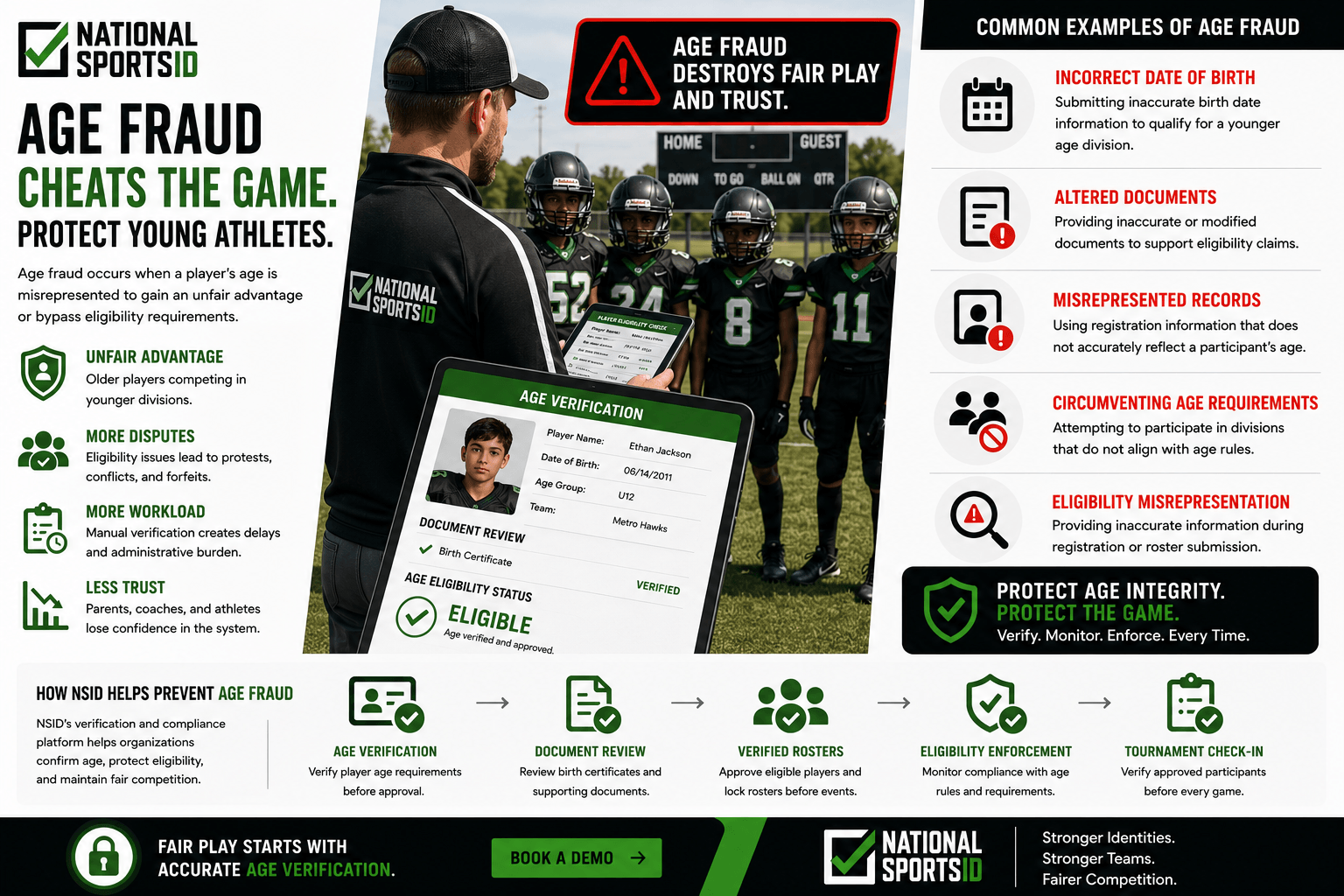
Age fraud in youth sports occurs when a player’s age is intentionally misrepresented in order to gain a competitive advantage or bypass eligibility requirements.
Most youth sports leagues and tournaments establish age-based participation rules to help create fair competition and provide athletes with opportunities to compete against similarly aged players. When inaccurate age information is submitted, it can create competitive imbalances and lead to disputes among teams, coaches, parents, and event organizers.
As youth sports continue to grow, organizations face increasing challenges related to eligibility verification and roster management. Age fraud can undermine confidence in competition and create significant administrative challenges.
This page explains what age fraud is, common examples, why it occurs, and how organizations help reduce age-related eligibility issues.
Youth sports age fraud including age misrepresentation, eligibility disputes, age verification challenges, roster integrity concerns, and tournament compliance issues.
Request a Demo or Get Started → Book a Demo
Why Age Fraud Matters
Age fraud can affect competitive balance and create challenges for youth sports organizations.
These issues may:
- Create unfair competitive advantages
- Lead to eligibility disputes
- Trigger tournament protests
- Reduce confidence in event outcomes
- Increase administrative workload
- Create enforcement challenges
For tournament directors and league administrators, age-related eligibility concerns can become difficult to manage without structured verification processes.
Common Examples of Age Fraud
Age fraud can take many forms, including:
Incorrect Date of Birth Information
Submitting inaccurate birth date information to qualify for a younger age division.
Altered Documentation
Providing inaccurate or modified documents intended to support eligibility claims.
Misrepresented Participant Records
Using registration information that does not accurately reflect a participant’s age.
Circumventing Age Requirements
Attempting to participate in divisions that do not align with established age rules.
Eligibility Misrepresentation
Providing inaccurate information during registration or roster submission processes.
These situations often create disputes between teams, parents, coaches, and event organizers.
Why Age Fraud Happens
Organizations may encounter age fraud for a variety of reasons, including:
- Competitive pressure to win
- Perceived athletic advantages
- Weak eligibility review processes
- Manual verification procedures
- Limited oversight
- Inconsistent enforcement
The larger an event becomes, the more difficult it can be to identify age-related issues without structured verification systems.
How Organizations Help Reduce Age Fraud
Organizations often use structured verification and compliance processes to improve eligibility oversight.
These systems may include:
Age Verification
Reviewing age-related eligibility requirements before approval.
Identity Verification
Confirming participant identity information.
Document Review
Reviewing supporting eligibility documentation.
Verified Rosters
Approving roster information before competition begins.
Tournament Check-In Verification
Reviewing approved participants before competition.
These processes help organizations improve accountability while reducing eligibility-related disputes.
How NSID Helps Address Age Fraud
National Sports ID (NSID) provides verification, roster management, and compliance tools designed specifically for youth sports organizations.
These systems help organizations:
- Verify player age requirements
- Review eligibility documentation
- Support verified roster workflows
- Monitor compliance status
- Improve tournament oversight
- Strengthen roster integrity
These workflows help organizations improve operational consistency while reducing age-related disputes and administrative inefficiencies.
Explore NSID’s Age Verification Software
Age Fraud in Youth Sports FAQs
What is age fraud in youth sports?
Age fraud occurs when a player’s age is intentionally misrepresented in order to gain a competitive advantage or bypass eligibility requirements.
Why is age fraud a problem?
Age fraud can create unfair competition, trigger disputes, lead to tournament protests, and reduce confidence in event outcomes.
What are common examples of age fraud?
Examples may include incorrect birth date information, altered documentation, misrepresented participant records, and attempts to bypass age requirements.
How do organizations help prevent age fraud?
Organizations often use age verification, identity verification, document review, verified rosters, and tournament check-in verification processes.
Can age fraud affect tournament results?
Yes. Age-related eligibility violations can result in disputes, protests, forfeits, or other actions based on league or tournament rules.
How does NSID help address age fraud?
NSID helps organizations verify player age requirements, review eligibility documentation, monitor compliance status, and improve tournament oversight through centralized verification systems.