
What is Waiver Non-Compliance?
Introduction
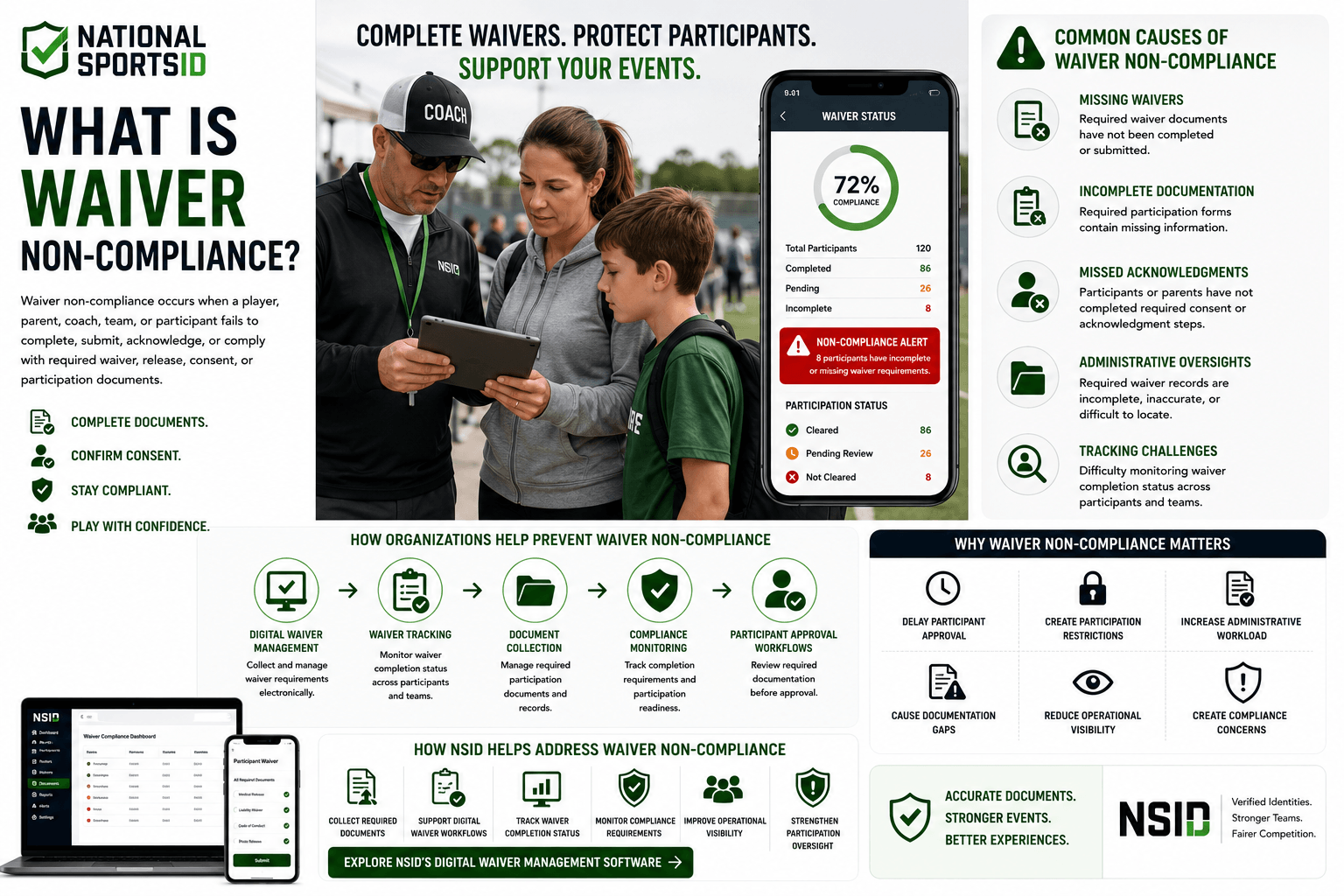
Waiver non-compliance occurs when a player, parent, coach, team, or participant fails to complete, submit, acknowledge, or comply with required waiver, release, consent, or participation documents established by a league, tournament, camp, clinic, or governing organization.
Waivers are commonly used in youth sports to communicate participation terms, obtain required acknowledgments, document consent, and support event operations. When waiver requirements are not completed or properly managed, organizations may encounter participation delays, compliance concerns, administrative challenges, and operational inefficiencies.
As youth sports organizations manage larger participation volumes and increasing documentation requirements, maintaining waiver compliance becomes increasingly important.
This page explains what waiver non-compliance is, common causes, why it matters, and how organizations help manage waiver-related requirements.
Youth sports waiver non-compliance including missing waivers, incomplete participation documents, waiver tracking issues, participant approval challenges, and compliance management workflows.
Request a Demo or Get Started → Book a Demo
Why Waiver Non-Compliance Matters
Waiver non-compliance can create operational and administrative challenges for organizations.
These situations may:
- Delay participant approval
- Create participation restrictions
- Increase administrative workload
- Cause documentation gaps
- Reduce operational visibility
- Create compliance concerns
For tournament directors and league administrators, maintaining waiver compliance helps support efficient event operations and participation oversight.
Common Causes of Waiver Non-Compliance
Waiver non-compliance may occur for a variety of reasons, including:
Missing Waivers
Required waiver documents have not been completed or submitted.
Incomplete Documentation
Required participation forms contain missing information.
Missed Acknowledgments
Participants or parents have not completed required consent or acknowledgment steps.
Administrative Oversights
Required waiver records are incomplete, inaccurate, or difficult to locate.
Tracking Challenges
Organizations have difficulty monitoring waiver completion status across participants and teams.
These situations often require additional review before participation can be approved.
How Organizations Help Prevent Waiver Non-Compliance
Organizations often use document management and compliance systems to improve waiver oversight.
These systems may support:
Digital Waiver Management
Collecting and managing waiver requirements electronically.
Waiver Tracking
Monitoring waiver completion status across participants and teams.
Document Collection
Managing required participation documents and records.
Compliance Monitoring
Tracking completion requirements and participation readiness.
Participant Approval Workflows
Reviewing required documentation before approval.
These processes help organizations improve accountability while reducing documentation-related challenges.
How NSID Helps Address Waiver Non-Compliance
National Sports ID (NSID) provides verification, document management, and compliance tools designed specifically for youth sports organizations.
These systems help organizations:
- Collect required participation documents
- Support digital waiver workflows
- Track waiver completion status
- Monitor compliance requirements
- Improve operational visibility
- Strengthen participation oversight
These workflows help organizations improve operational consistency while reducing administrative inefficiencies.
Explore NSID’s Digital Waiver Management Software
Waiver Non-Compliance FAQs
What is waiver non-compliance?
Waiver non-compliance occurs when required waiver, release, consent, or participation documents are not completed, submitted, acknowledged, or properly managed.
Why are waivers important in youth sports?
Waivers help communicate participation terms, document consent, obtain acknowledgments, and support event operations.
What causes waiver non-compliance?
Common causes include missing waivers, incomplete documentation, missed acknowledgments, administrative oversights, and waiver tracking challenges.
How do organizations help prevent waiver non-compliance?
Organizations often use digital waiver management, waiver tracking, document collection, compliance monitoring, and participant approval workflows.
Can waiver non-compliance affect participation?
Yes. Missing or incomplete waiver requirements may delay participant approval or restrict participation based on organizational policies.
How does NSID help address waiver non-compliance?
NSID helps organizations collect participation documents, manage waiver requirements, monitor completion status, and support compliance workflows through centralized systems.