
What is Double Rostering?
Introduction
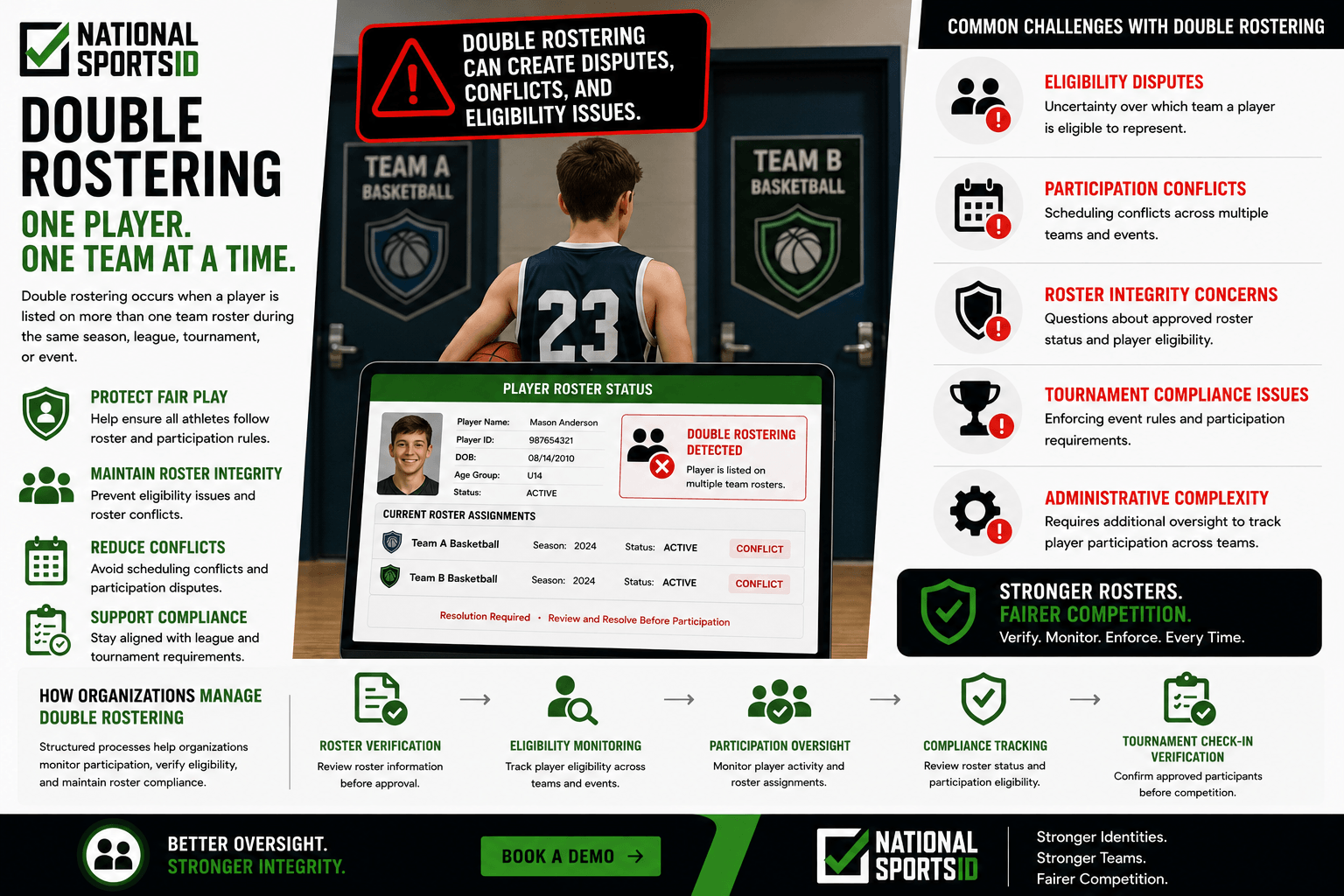
Double rostering occurs when a player is listed on more than one team roster during the same season, league, tournament, or event.
Some organizations allow double rostering under specific rules and participation guidelines, while others prohibit it entirely. The rules often vary based on the sport, league structure, age division, tournament format, and governing organization requirements.
Without clear oversight, double rostering can create eligibility concerns, roster integrity issues, scheduling conflicts, and participation disputes. As youth sports organizations manage increasing numbers of teams and participants, monitoring roster activity becomes more important.
This page explains what double rostering is, why it matters, common challenges associated with double rostering, and how organizations manage participation requirements.
Youth sports double rostering including player eligibility, roster compliance, participation oversight, tournament rules, and roster integrity management.
Request a Demo or Get Started → Book a Demo
Why Double Rostering Matters
Double rostering can impact participation oversight and roster integrity when not managed properly.
These situations may:
- Create eligibility disputes
- Cause roster integrity concerns
- Lead to participation conflicts
- Increase administrative workload
- Create tournament compliance challenges
- Complicate roster management
Organizations often establish roster rules to help maintain fair competition and consistent participation standards.
Common Challenges With Double Rostering
Organizations may encounter challenges such as:
Eligibility Disputes
Questions regarding which team a player is eligible to represent.
Participation Conflicts
Scheduling conflicts involving multiple teams or events.
Roster Integrity Concerns
Uncertainty regarding approved roster status and participation eligibility.
Tournament Compliance Issues
Challenges associated with enforcing event participation rules.
Administrative Complexity
Additional oversight required to monitor player participation across teams.
These situations often require clear policies and structured roster management processes.
How Organizations Manage Double Rostering
Organizations often use roster management and compliance systems to improve oversight.
These systems may support:
Roster Verification
Reviewing roster information before approval.
Eligibility Monitoring
Tracking participation requirements across teams and events.
Participation Oversight
Monitoring player activity and roster assignments.
Compliance Tracking
Reviewing roster status and participation eligibility.
Tournament Check-In Verification
Confirming approved participants before competition.
These workflows help organizations improve accountability while reducing roster-related disputes.
How NSID Supports Double Rostering Management
National Sports ID (NSID) provides roster management, verification, and compliance tools designed specifically for youth sports organizations.
These systems help organizations:
- Verify player eligibility requirements
- Monitor participation across rosters
- Support verified roster workflows
- Track compliance status
- Improve tournament oversight
- Strengthen roster integrity
These workflows help organizations improve operational consistency while reducing disputes and administrative inefficiencies.
Explore NSID’s Verified Rostering Software
Double Rostering FAQs
What is double rostering?
Double rostering occurs when a player is listed on more than one team roster during the same season, league, tournament, or event.
Is double rostering allowed in youth sports?
Some organizations allow double rostering under specific rules, while others prohibit it. Requirements vary by league, tournament, sport, and governing organization.
Why is double rostering a concern?
Double rostering can create eligibility disputes, participation conflicts, roster integrity concerns, and tournament compliance challenges.
What problems can double rostering cause?
Double rostering may result in scheduling conflicts, roster disputes, administrative complexity, and uncertainty regarding player eligibility.
How do organizations manage double rostering?
Organizations often use roster verification, eligibility monitoring, compliance tracking, participation oversight, and check-in verification processes.
How does NSID support double rostering management?
NSID helps organizations verify player eligibility, monitor participation across rosters, track compliance status, and support roster integrity through centralized verification systems.