
What is Roster Integrity?
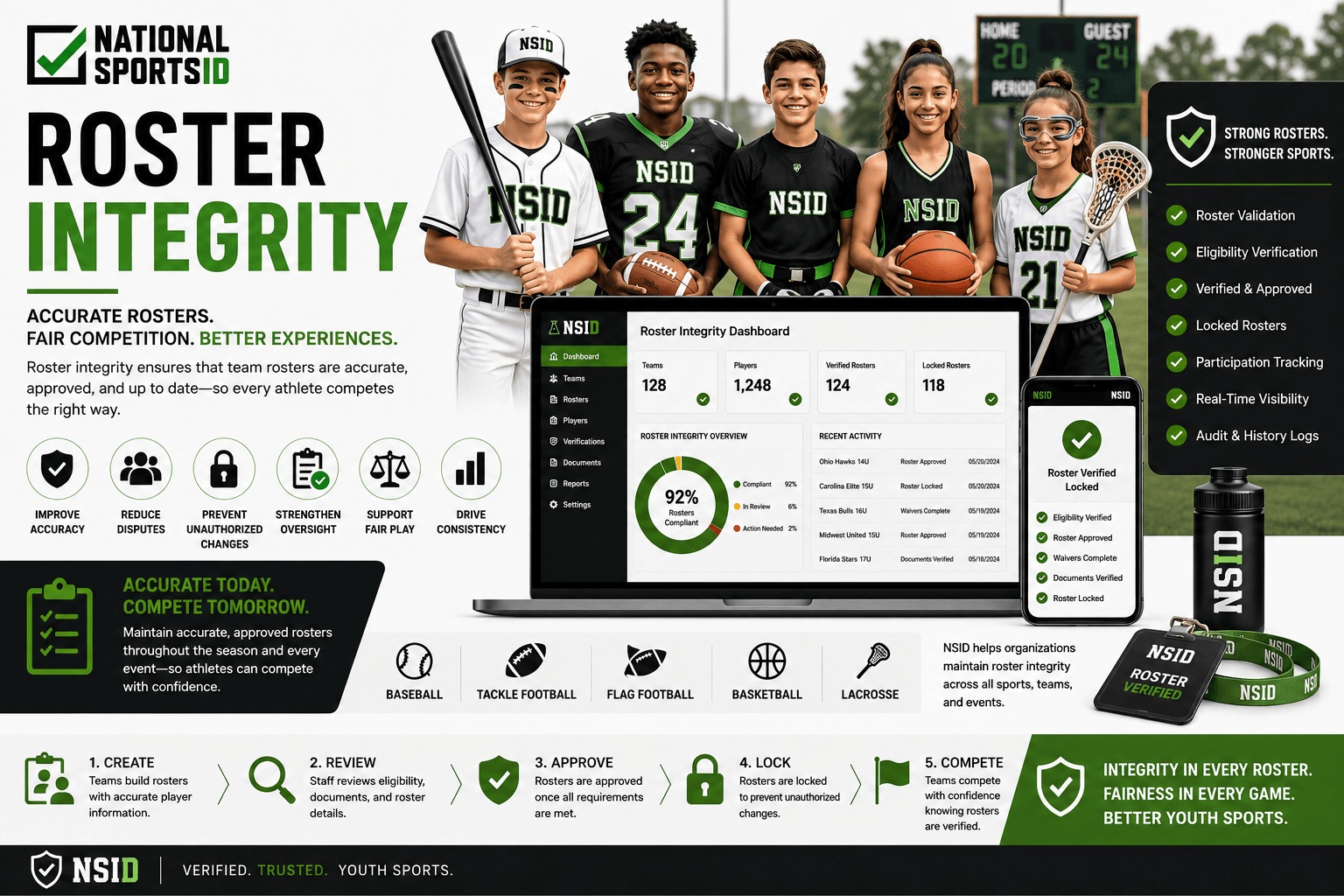
Introduction
Roster integrity refers to the accuracy, consistency, and reliability of roster information throughout a season, league, or tournament.
Youth sports organizations often manage large numbers of teams, athletes, eligibility requirements, roster updates, and participation records. Maintaining roster integrity helps organizations improve participation oversight, reduce disputes, and confirm that roster information remains accurate and approved.
This page explains what roster integrity is, why it matters, and how structured roster management systems help organizations improve operational consistency and tournament oversight.
Youth sports roster integrity systems including roster validation, eligibility verification, roster approvals, participation tracking, and tournament operational workflows.
Request a Demo or Get Started → Book a Demo
Why Roster Integrity Matters
Roster integrity helps organizations maintain accurate and approved participation records.
These systems help leagues and tournaments:
- Improve roster accuracy
- Reduce eligibility disputes
- Prevent unauthorized roster changes
- Strengthen participation oversight
- Improve operational consistency
- Support fair competition standards
As participation volumes increase, maintaining roster integrity becomes increasingly important for leagues and tournaments.
Common Problems Without Roster Integrity
Organizations relying on manual or inconsistent roster management processes may experience:
- Inaccurate roster information
- Eligibility disputes
- Unauthorized roster modifications
- Guest player concerns
- Missing participant records
- Inconsistent roster enforcement
- Limited visibility into roster status
These operational challenges often create additional workload for tournament directors and league administrators.
How Roster Integrity Works
Roster integrity is supported through structured roster review and management workflows.
These systems may support:
Roster Validation
Reviewing roster information for completeness and accuracy.
Eligibility Verification
Confirming that players meet participation requirements before approval.
Verified Rosters
Approving rosters before competition begins.
Locked Rosters
Restricting unauthorized roster modifications after approval deadlines.
Participation Tracking
Monitoring roster activity and participation status across teams and events.
These workflows help organizations improve accountability while reducing roster-related disputes.
How NSID Supports Roster Integrity
National Sports ID (NSID) provides roster management and verification systems designed specifically for youth sports organizations.
These systems help organizations:
- Verify player age and grade requirements
- Review and approve roster information
- Support verified and locked rosters
- Monitor participation and compliance status
- Improve operational visibility across events
- Strengthen roster integrity workflows
These workflows help organizations improve operational consistency while reducing disputes and administrative inefficiencies.
Explore NSID’s Verified Rostering Software
Roster Integrity FAQs
What is roster integrity?
Roster integrity refers to the accuracy, consistency, and reliability of roster information throughout a season, league, or tournament.
Why is roster integrity important?
Roster integrity helps organizations maintain accurate participation records, reduce disputes, and improve operational oversight.
What affects roster integrity?
Roster integrity may be affected by inaccurate player information, unauthorized roster changes, incomplete records, or inconsistent roster management processes.
How does roster integrity help tournaments?
Roster integrity helps organizations improve roster accuracy, strengthen participation oversight, and reduce eligibility-related disputes.
What problems occur without roster integrity?
Organizations may experience inaccurate roster information, eligibility disputes, unauthorized roster modifications, and operational inefficiencies.
How does NSID support roster integrity?
NSID helps organizations review roster information, verify eligibility requirements, manage verified rosters, and monitor participation status through centralized verification systems.