
What is Tournament Operations Management?
Introduction
Tournament operations management is the process of planning, organizing, coordinating, and overseeing the administrative, logistical, compliance, and participant-related activities required to operate a successful tournament.
Youth sports tournaments often involve hundreds of teams, thousands of participants, game schedules, venues, officials, eligibility requirements, rosters, waivers, and event-specific regulations. Tournament operations management helps organizations maintain visibility, improve efficiency, reduce operational risks, and support a positive event experience.
As tournaments grow larger and more complex, effective operations management becomes increasingly important for maintaining fair competition, participant accountability, and operational consistency.
This page explains what tournament operations management is, why it matters, common responsibilities, and how organizations use management systems to improve tournament administration.
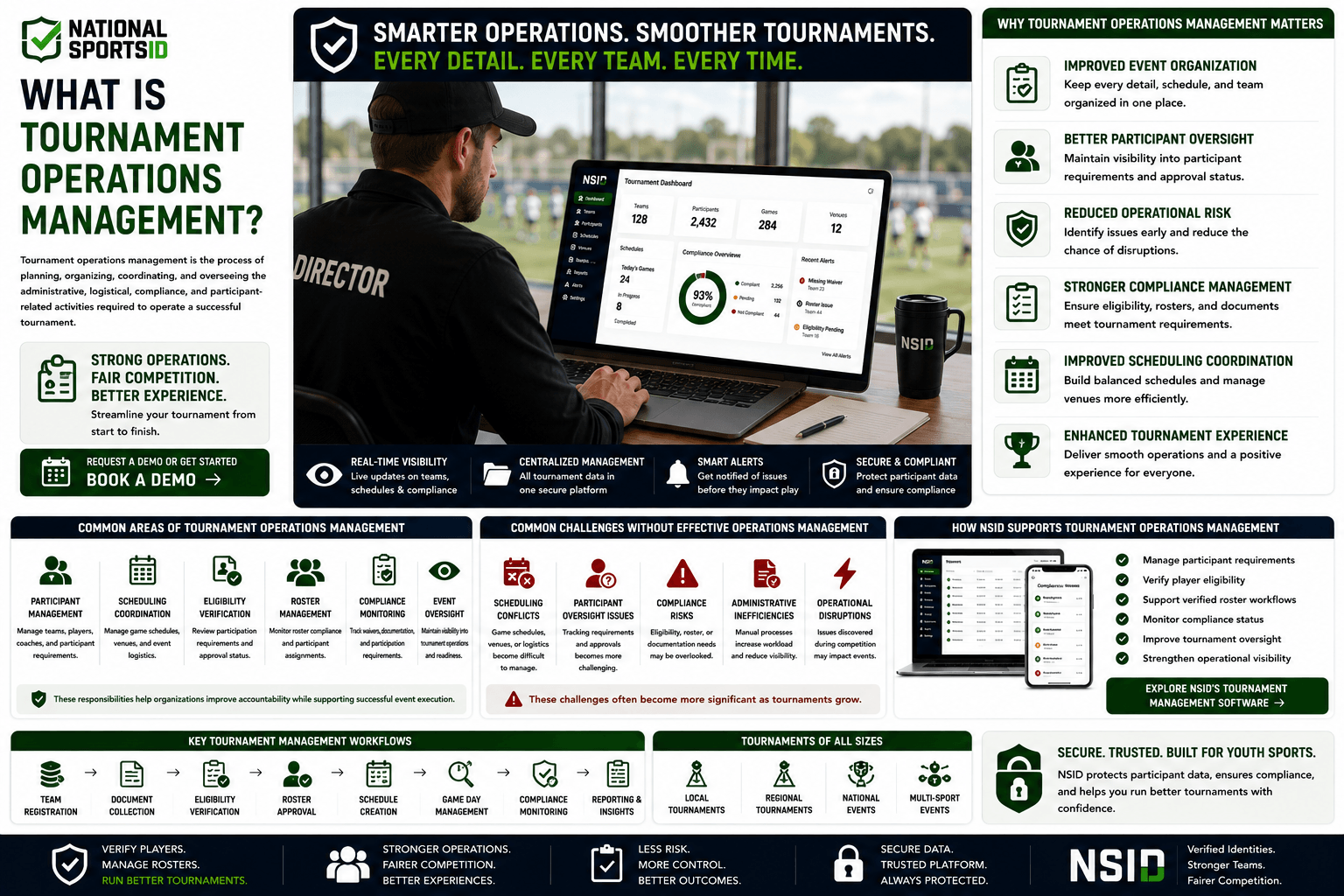
Youth sports tournament operations management including tournament administration, participant management, scheduling, eligibility verification, compliance monitoring, and event oversight workflows.
Request a Demo or Get Started → Book a Demo
Why Tournament Operations Management Matters
Strong tournament operations management helps organizations coordinate event activities and improve operational efficiency.
These benefits may include:
- Improved event organization
- Better participant oversight
- Reduced operational risk
- Stronger compliance management
- Improved scheduling coordination
- Enhanced tournament experience
For tournament directors and league administrators, effective operations management helps support efficient event execution and fair competition.
Common Areas of Tournament Operations Management
Organizations often oversee multiple operational responsibilities during tournament administration.
Participant Management
Managing teams, players, coaches, and participant requirements.
Scheduling Coordination
Managing game schedules, venues, and event logistics.
Eligibility Verification
Reviewing participation requirements and approval status.
Roster Management
Monitoring roster compliance and participant assignments.
Compliance Monitoring
Tracking waivers, documentation, and participation requirements.
Event Oversight
Maintaining visibility into tournament operations and participant readiness.
These responsibilities help organizations improve accountability while supporting successful event execution.
Common Challenges Without Effective Tournament Operations Management
Organizations may encounter challenges such as:
Scheduling Conflicts
Game schedules, venue assignments, or event logistics become difficult to manage.
Participant Oversight Issues
Tracking participant requirements and approvals becomes more challenging.
Compliance Risks
Eligibility, roster, or documentation requirements may be overlooked.
Administrative Inefficiencies
Manual processes increase workload and reduce visibility.
Operational Disruptions
Issues discovered during competition may impact event operations.
These challenges often become more significant as tournaments grow.
How NSID Supports Tournament Operations Management
National Sports ID (NSID) provides tournament management, verification, roster management, scheduling, and compliance tools designed specifically for youth sports organizations.
These systems help organizations:
- Manage participant requirements
- Verify player eligibility
- Support verified roster workflows
- Monitor compliance status
- Improve tournament oversight
- Strengthen operational visibility
These workflows help organizations improve operational consistency while reducing administrative inefficiencies.
Explore NSID’s Tournament Management Software
Tournament Operations Management FAQs
What is tournament operations management?
Tournament operations management is the process of planning, organizing, coordinating, and overseeing the administrative, logistical, compliance, and participant-related activities required to operate a tournament.
Why is tournament operations management important?
Tournament operations management helps organizations improve event organization, participant oversight, compliance management, and operational efficiency.
What areas are included in tournament operations management?
Tournament operations management may include participant management, scheduling coordination, eligibility verification, roster management, compliance monitoring, and event oversight.
What challenges occur without effective tournament operations management?
Common challenges include scheduling conflicts, participant oversight issues, compliance risks, administrative inefficiencies, and operational disruptions.
How does tournament operations management improve event operations?
Tournament operations management helps organizations improve coordination, maintain visibility, reduce risk, and support successful tournament execution.
How does NSID support tournament operations management?
NSID helps organizations manage participant requirements, verify eligibility, monitor compliance status, support verified rosters, and improve tournament oversight through a centralized platform.